An AC not getting cold in Perry Hall, MD almost always traces back to one of eight culprits: a thermostat setting, a dirty filter, a frozen coil, a blocked condenser, low refrigerant, a bad electrical part, an undersized system, or leaky ducts. We diagnose this exact complaint on dozens of calls every cooling season, and the fix is rarely a mystery once you know where to look. Work through the checklist below before you pick up the phone.
Key Takeaways
- Thermostat settings — the wrong mode or a dead battery can mimic a major breakdown.
- Dirty air filter — blocks airflow and starves the coil of the air it needs to cool.
- Frozen evaporator coil — ice buildup cuts cooling short, often within minutes of startup.
- Dirty condenser unit — a blocked outdoor unit can't release the heat it pulls from your home.
- Refrigerant leak — low refrigerant means warm air and a repair, not just a quick recharge.
Most of these are five-minute DIY checks. Refrigerant and electrical problems need a licensed technician from our HVAC contractor team serving Perry Hall.
Why Is My AC Not Blowing Cold Air? (Common Causes)
An air conditioner doesn't make cold air. It removes heat from inside your home and dumps it outside. Anything that interrupts that process, whether it's blocked airflow, a refrigerant problem, or a wiring issue, leaves a Perry Hall, MD home feeling warm and sticky even with the system running full blast. Here's where that chain most often breaks down.
| Cause | How Common | DIY or Pro |
|---|---|---|
| Thermostat set incorrectly | Very common | DIY |
| Dirty air filter | Very common | DIY |
| Dirty or blocked outdoor unit | Common | DIY |
| Frozen evaporator coil | Common | Usually pro |
| Refrigerant leak | Less common | Pro |
| Electrical/mechanical failure | Less common | Pro |
| Undersized AC unit | Less common | Pro |
| Leaky ductwork | Common in older homes | Pro |
Thermostat Set Incorrectly
Check this one first. It costs nothing and takes under a minute. Make sure the system is set to COOL, not just ON or HEAT, and confirm the fan is on AUTO rather than ON, since running the fan continuously can make air feel warmer than it is.
A thermostat not cooling the house might simply have dead batteries, a loose wire, or a target temperature set only a degree below the room's actual temperature. Try dropping the setpoint 3-5 degrees below the current reading and wait a few minutes before assuming something's broken.
Dirty or Clogged Air Filter
A dirty air filter is the single most common reason an AC stops cooling effectively. When a filter clogs with dust and pet hair, it restricts airflow and starves the evaporator coil, and a starved coil can eventually freeze over, cutting off cooling entirely.
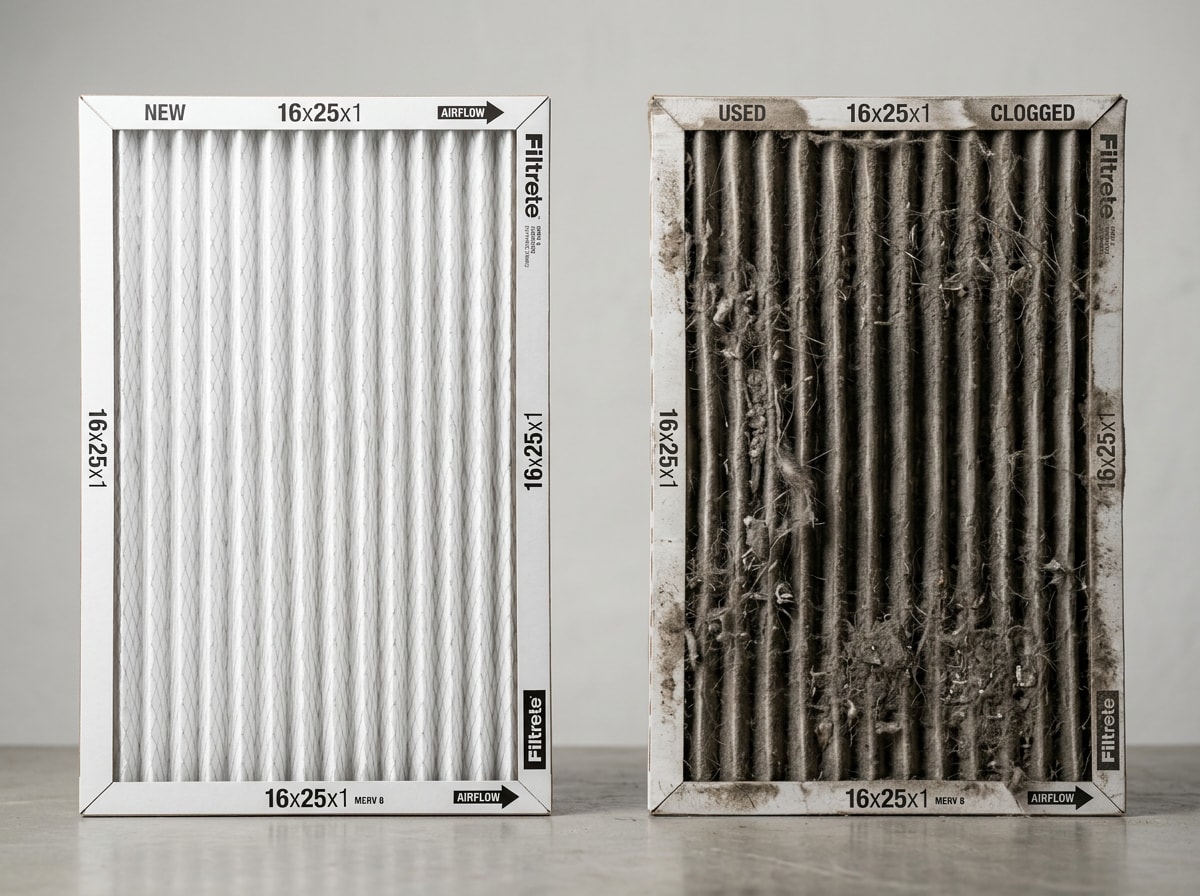
Check your filter monthly during peak cooling season and change it every 60-90 days, or sooner if you have pets or run the system constantly. Check your filter every month, especially during heavy use months, and change it if it looks dirty, with a minimum change-out every three months. It's one of the cheapest ways to turn a sluggish system back into real cooling performance.
Frozen Evaporator Coil
A frozen evaporator coil happens when restricted airflow or low refrigerant lets moisture on the coil freeze instead of drain, and it typically shows up as cold air that fades into warm or no airflow within 15-30 minutes of startup. Maryland's thick summer humidity speeds this up, since more moisture on the coil means more material to freeze.
The symptom location matters for diagnosis. Ice forming directly on the indoor coil usually points to blocked airflow: a dirty filter, closed vents, or a failing blower motor. Ice on the copper line set outside, by contrast, more often signals low refrigerant.
Either way, the fix starts the same. Switch the thermostat to OFF, set the fan to ON, and let the coil thaw for several hours before testing again. If the cold-then-warm pattern keeps repeating after a full thaw, that's an underlying airflow or refrigerant issue that won't resolve on its own.
Blocked or Dirty Outdoor Condenser Unit
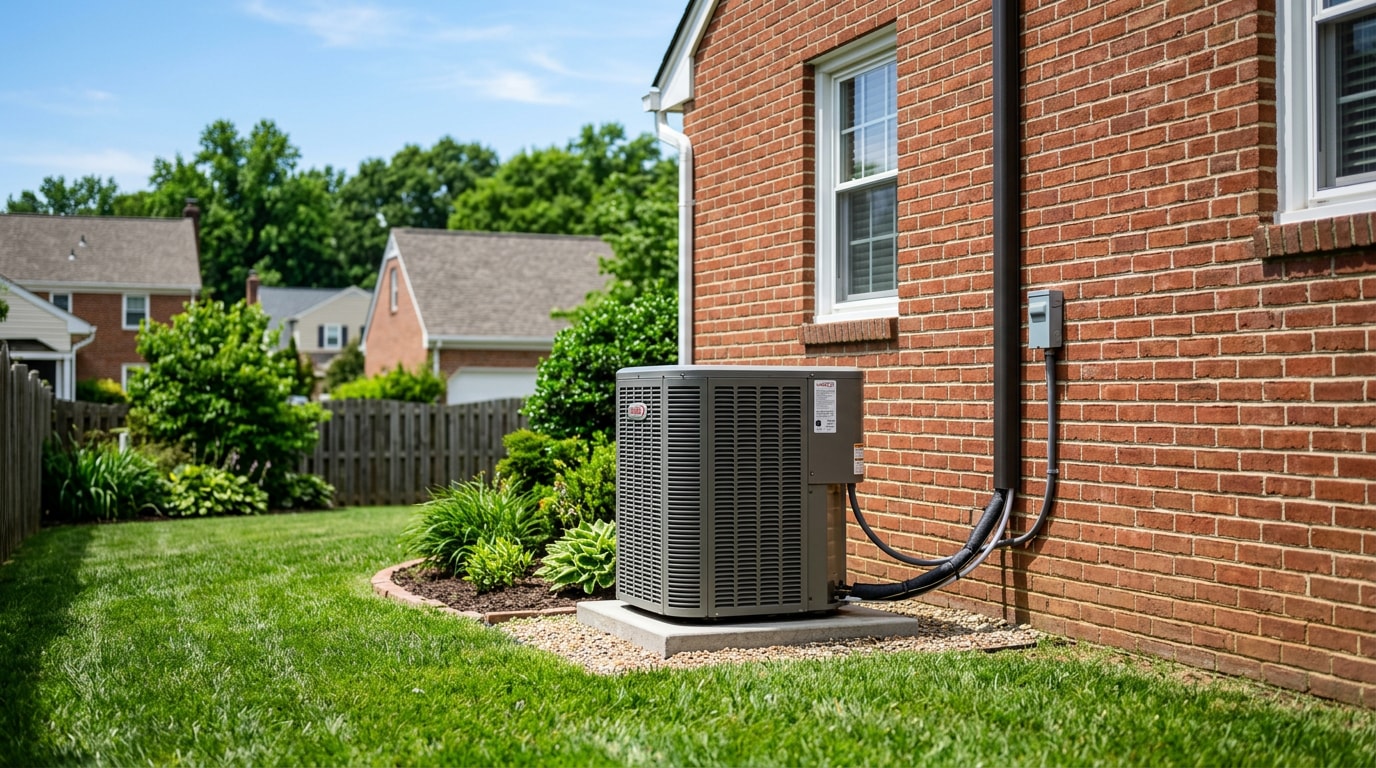
The outdoor unit is where your AC dumps the heat it removed from inside the house. A dirty condenser coil blocks that heat transfer the same way a clogged filter blocks airflow indoors. Grass clippings, leaves, pollen, and nearby shrubs are the usual culprits.
Walk outside and look for debris packed into the fins, and confirm there's at least two feet of clearance on all sides for proper airflow. A quick rinse with a garden hose (power off first) often restores performance homeowners assumed required a service call.
Refrigerant Leak or Low Refrigerant Levels
Refrigerant doesn't get consumed the way fuel does. A system that's low on refrigerant almost always has a leak somewhere in the line set or coil. Topping it off without finding and sealing that leak is a temporary patch, not a repair, and the system will run low again.
Handling refrigerant legally requires an EPA Section 608 credential. EPA regulations under Section 608 of the Clean Air Act require that technicians who maintain, service, repair, or dispose of equipment that could release refrigerants into the atmosphere must be certified. That's a good filter for picking a contractor: ask whether the technician coming to your Perry Hall home is certified before they touch your line set. Low refrigerant also tends to show up alongside hissing sounds or a coil that ices over repeatedly, and our air conditioning repair team leak-checks before recharging on every call.
Electrical or Mechanical Component Failure
Sometimes the system looks dead but the real issue is a failed capacitor, a burned-out fan motor, or a compressor not running at all. A tripped breaker can also look identical to a refrigerant problem from the outside. The outdoor unit sits silent while the indoor blower keeps circulating air that's never been cooled.
These repairs involve high-voltage components and should be left to a licensed technician. Attempting a capacitor or compressor fix without the right training and tools risks injury and can turn a moderate repair into a full system replacement.
Undersized or Improperly Sized Air Conditioner
An AC unit sized too small for the home's square footage will run nearly nonstop during peak summer heat without ever fully catching up, especially in Perry Hall's humid, mid-Atlantic summers where the system has to work overtime pulling moisture out of the air. Average relative humidity in the Baltimore area is lowest in late winter and early spring and highest in late summer and early fall, averaging about 75 percent in August, September, and October. That humidity load is exactly why a system sized on square footage alone often falls short here.
This shows up less as a sudden failure and more as a system that "can't keep up" no matter how long it runs. Proper sizing depends on square footage, insulation, window exposure, and local climate data, not a flat per-room estimate, which is a common source of this problem in older additions or converted spaces. If your system is aging out, our HVAC equipment replacement team can run the load calculation before you buy anything.
Leaky Ductwork Issues
Many homes in and around Perry Hall have ductwork running through unconditioned attics or crawlspaces, and duct leaks in those spaces let cooled air escape before it ever reaches the living room or bedroom. The AC itself may be working perfectly, but the air just isn't arriving where you need it.
This typically shows up as uneven cooling. One room feels fine while another stays warm, rather than a whole-house failure. A pressure test can find leaks that aren't visible from the attic hatch.
Complex AC Issues That Require Professional Repair
The causes above are mostly things a homeowner can check or fix solo. One other is easy to spot but should never be a DIY project: physical coil damage.
Damaged Condenser Coils
This is different from a simply dirty condenser coil. A damaged condenser coil has physical corrosion, bent fins, or impact damage from age, lawn equipment, or years of exposure to humid mid-Atlantic weather. Cleaning won't fix a coil that's actually corroded or punctured.
Coil replacement is a significant repair, and a technician will usually weigh the cost against the age of the rest of the system before recommending it. If you're weighing repair against replacement, our breakdown of HVAC hourly rates in Parkville, MD is a useful starting point for what labor typically runs in this area.
When to Call an HVAC Technician
Before scheduling a repair, confirm the basics: thermostat set to COOL, filter clean, outdoor unit clear of debris, and the breaker hasn't tripped. If all of that checks out and the air still isn't cold, it's time to call for AC repair in Perry Hall.
Stop running the system and call for emergency repair right away if you notice:
- Ice on the refrigerant lines
- A burning smell
- A breaker that keeps tripping after reset
- A hissing or bubbling sound near the outdoor unit
These are signs of refrigerant leaks or electrical faults that get more expensive, or more dangerous, the longer they run. If you're already past the easy checks, get a free estimate and we'll have a technician out to diagnose it properly rather than guessing twice.
Keep Your AC Running Efficiently Year-Round
Most no-cooling calls trace back to deferred maintenance rather than a single dramatic failure. A dirty filter slows down air flow and makes the system work harder, so check your filter every month, especially during heavy use months, and change it every three months at a minimum.
Pair that with an annual tune-up, ideally scheduled in spring before peak heat arrives, to catch a weak capacitor, a slightly low refrigerant charge, or a dirty coil before it turns into a no-cooling emergency. Our HVAC maintenance plans bundle filter checks, coil cleaning, and a seasonal inspection, and it's usually cheaper over a few years than paying for emergency repairs one at a time. You can see the full range of what we handle on our homepage.
FAQ
Why Is My AC Not Blowing Cold Air But Running?
The system is running, but somewhere in the heat-exchange chain, airflow, refrigerant, or an electrical component, something has broken down. Work through the thermostat, filter, and outdoor unit checks above first, since those resolve the majority of cases without a service call.
How Long Does It Take an AC to Start Blowing Cold Air?
A healthy system should blow noticeably cooler air within 5-15 minutes of startup. If it takes much longer, or never quite gets there, that usually points to restricted airflow, low refrigerant, or a sizing mismatch rather than normal startup lag.
Why Does My AC Blow Cold at First Then Warm?
This pattern is the classic sign of a frozen evaporator coil. The system cools normally until ice builds up on the coil and blocks airflow, at which point output fades to warm or stops altogether until the coil fully thaws.
Should I Turn Off My AC If It's Not Cooling?
Yes. Running a system that isn't cooling properly for extended periods risks damaging the compressor, which is the most expensive component to replace. It's generally safe to leave the fan on by itself for air circulation, but switch the cooling mode off until the underlying issue is diagnosed.
Is It Normal for an AC to Run All Day in Perry Hall Summers?
Yes, to a point. On the hottest, muggiest days it's normal for a properly sized system to run most of the afternoon. If it's running nonstop and the house still isn't reaching the setpoint, that points to one of the causes above rather than normal operation.