Electric furnace maintenance in Cockeysville, MD is what separates a quiet winter from a 2 a.m. no-heat call during the first hard freeze. A furnace that skips its annual tune-up almost always fails on the coldest night of the year, not a mild one. This guide breaks down what you can check yourself, what to leave to a licensed technician, and exactly when to schedule each.
Why Electric Furnace Maintenance Matters in Cockeysville, MD
Electric furnace maintenance isn't just a line item for peace of mind. It directly affects efficiency and your monthly energy bill. Many Cockeysville homes have basements or utility closets that collect dust, pet hair, and humidity year-round, and that buildup works its way into furnace components faster than most homeowners expect.
A furnace running with dirty coils, a clogged filter, or a strained blower motor has to work harder to hit the same temperature. Following a regular maintenance schedule can help reduce heating and cooling costs by 10% or more while also prolonging the life of the equipment , according to the U.S. Department of Energy. On service calls across Baltimore County, the electric furnaces that go five-plus years without a professional inspection are almost always the ones calling in January with a tripped sequencer or a burnt-out heating element, not a quick filter problem.
Beyond cost, there's breakdown prevention to consider. For homeowners weighing a DIY approach against professional service, our HVAC Maintenance plans outline what a full visit typically covers.
Common Electric Furnace Problems in Cockeysville Homes
Most electric furnace problems in Cockeysville homes trace back to three causes:
- A clogged filter restricting airflow
- Loose or corroded electrical connections
- Dust buildup inside the blower housing
Each produces its own warning signs, and catching them early is far cheaper than waiting for a full breakdown.
Seasonal pollen and yard debris push a lot of particulate into return vents each spring and fall, which clogs filters faster than many homeowners expect. A clogged filter cuts airflow, forces the blower to work harder, and can trigger the furnace to shut off before a room reaches temperature.
Furnace noises are a useful diagnostic tool:
- Rattling usually points to loose panels or ductwork
- Squealing often means a worn blower belt or bearing
- Humming can signal an electrical issue inside the control panel
Loose wiring and corroded connections aren't just a performance issue, they're a safety one. Heating equipment is a leading cause of fires in US homes , according to the National Fire Protection Association, which is one more reason to have electrical connections checked annually rather than waiting for a problem to announce itself. Blocked return or supply vents compound all of this, forcing longer run cycles to reach the thermostat's setpoint.
Electric Furnace Maintenance Checklist
Electric furnaces are mechanically simpler than gas models. There's no combustion, burner, or flue to worry about. But that doesn't mean they run maintenance-free. A handful of straightforward, homeowner-doable steps cover most of what keeps an electric system efficient between professional visits.
Change the Air Filter
Locate the furnace air filter, usually in a slot near the return air duct or inside the unit's cabinet. Pull it out and hold it up to a light. If you can't see light through it, replace it.
Slide the new filter in with the airflow arrow pointing toward the furnace, not away from it. It's important to check your air filter once a month in your central air conditioner, furnace, and/or heat pump, and either clean it if your system has a reusable filter or change it if your system requires a replacement . Homes with pets or higher dust levels may need monthly changes even outside peak season.
Clean the Blower
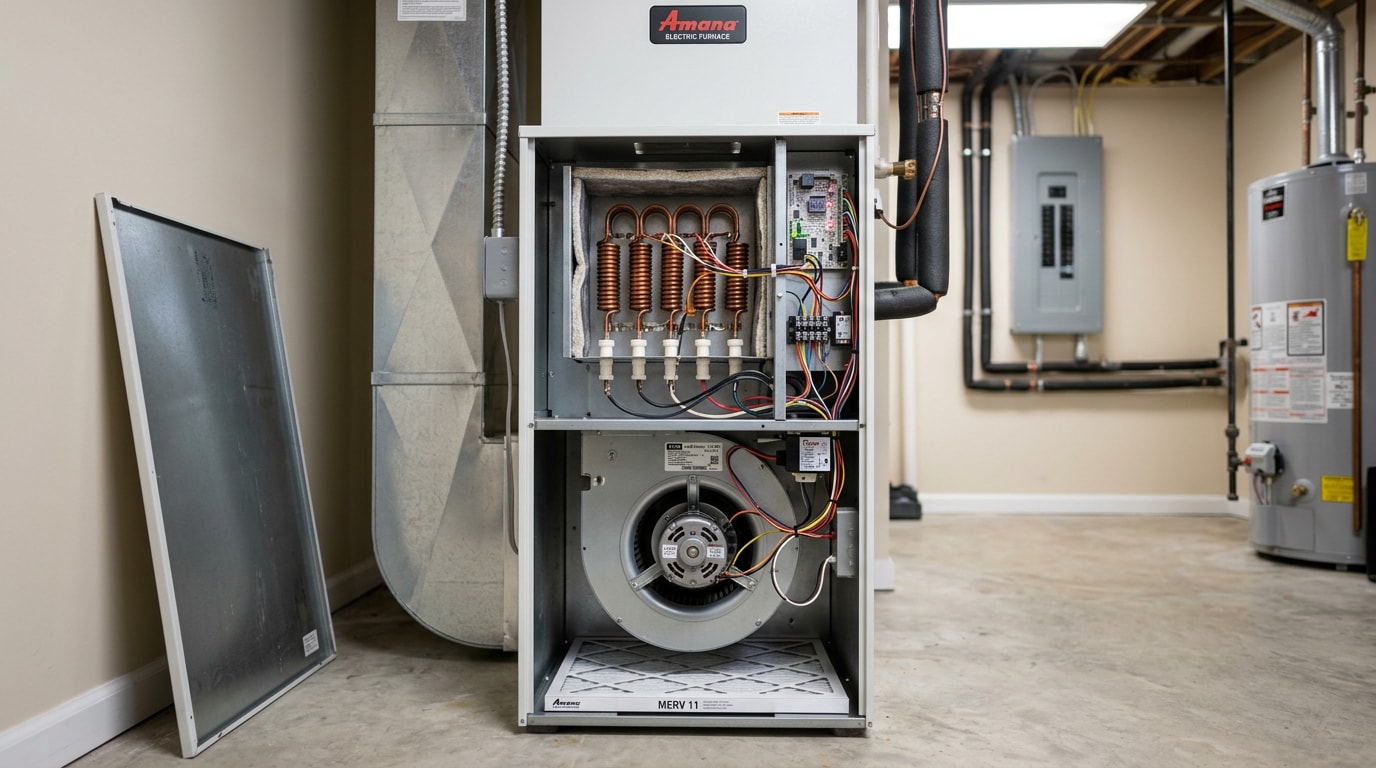
Remove the furnace's access panel, usually held on with a couple of screws or simple latches, to reach the blower assembly. Use a soft brush or a vacuum with a brush attachment to clear dust from the blades and housing.
A dirty blower motor has to work harder to move the same volume of air, which strains the motor and reduces overall airflow efficiency. This is a once- or twice-a-year task for most homes, done alongside a filter change.
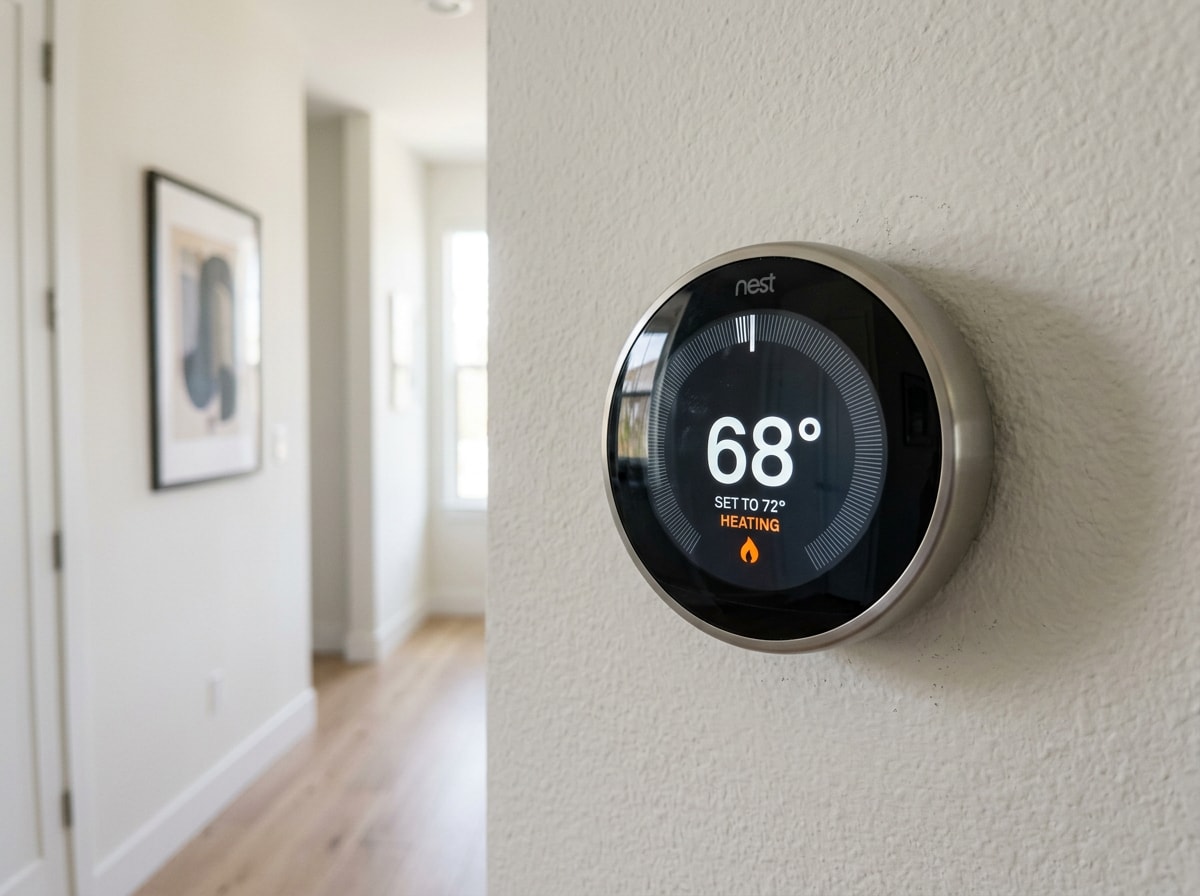
Check the Thermostat
Set the thermostat a few degrees above room temperature and confirm the furnace kicks on within a minute or two. If it doesn't respond, or the room temperature drifts from the setpoint, thermostat calibration may be off.
Replace batteries if the unit uses them, and check the display against a separate thermometer. Homeowners who want better accuracy and remote scheduling often upgrade to a smart thermostat, which can also flag irregular heating cycles before they become bigger problems.
Professional Furnace Maintenance: Tune-Up & Inspection
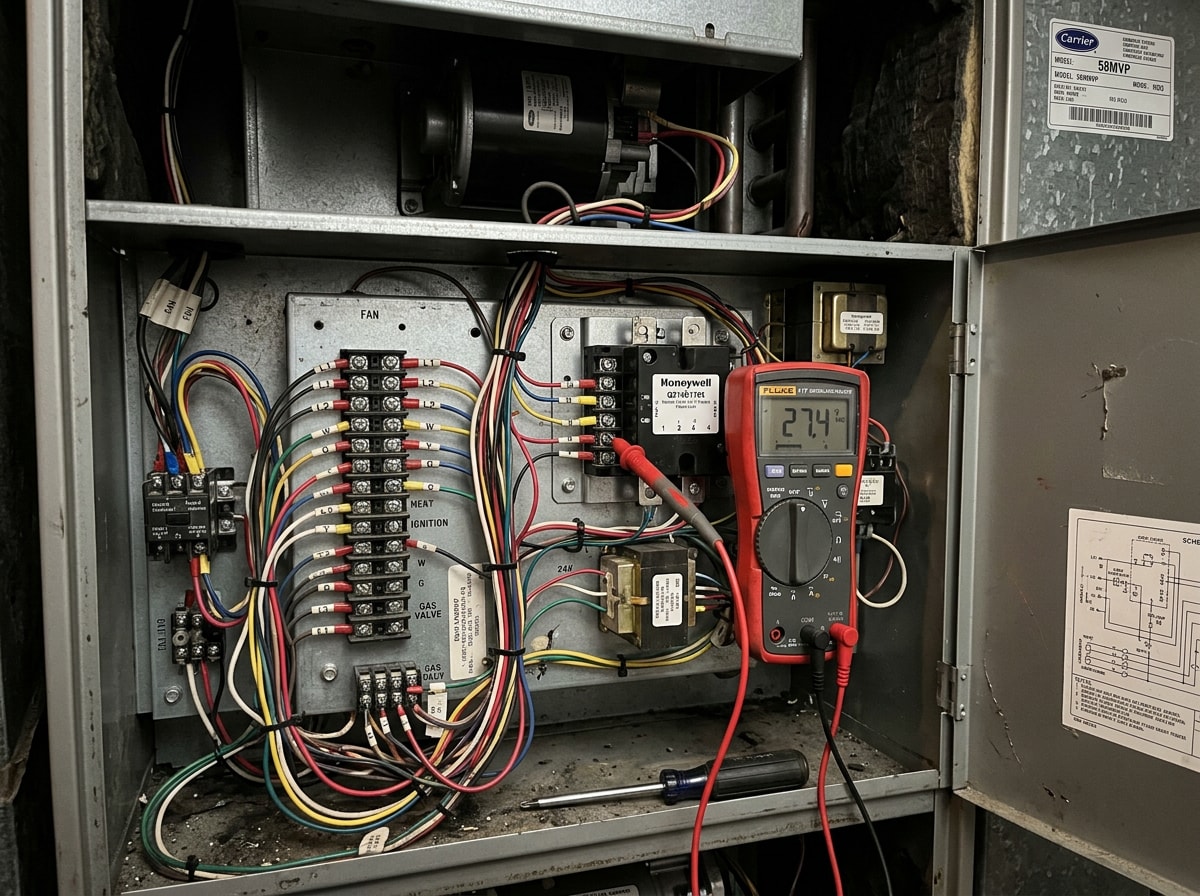
DIY steps handle the surface-level upkeep, but they don't cover what's happening inside the electrical cabinet. An annual professional tune-up, ideally scheduled before the first cold snap, is where a technician checks components a homeowner shouldn't open up alone.
Furnace Inspection Checklist
A technician's inspection checklist differs between electric and gas systems, since there's no combustion or flue to test on an electric unit. The focus shifts almost entirely to electrical safety and heat-transfer components.
| What's Checked | Electric Furnace | Gas Furnace |
|---|---|---|
| Heat source | Heating elements for wear/corrosion | Burner and ignition system |
| Safety check | Electrical connections, terminal torque | Gas line and carbon monoxide levels |
| Controls | Sequencer and contactor/relay function | Pilot or ignitor function |
| Airflow | Blower motor and filter | Blower motor and filter |
On an electric system, technicians verify that heating elements are drawing proper amperage, confirm terminal connections are torqued to spec, and test the sequencer that staggers element activation. If the unit is older or repairs start piling up, it's worth comparing those costs against HVAC equipment replacement before sinking more money into a system near the end of its life.
Signs You Need Professional Help
Call a technician if your furnace short-cycles, produces a burning smell, makes loud grinding or buzzing noises, or blows noticeably weak or uneven air. These warning signs often point to electrical or airflow issues that go beyond a filter change and risk leaving you without heat.
Short-cycling in particular, turning on and off in quick bursts, can point to a failing sequencer or an airflow restriction tripping a safety switch. Waiting on these signs usually turns a minor repair into a bigger one. Our furnace repair team can get a technician out before a small issue grows, and you can get a free estimate before any work begins.
Seasonal Maintenance Tips for Cockeysville Homeowners
Cockeysville's seasonal swings, humid summers followed by cold, damp winters, mean furnace maintenance works best on a two-checkpoint schedule rather than a single annual visit. A fall pre-winter tune-up, done before temperatures drop, catches any issues left over from months of dormancy.
A second check in spring, after pollen season tapers off, is worth doing even though it's less commonly discussed. Pollen and seasonal debris settle into filters and ductwork through spring, and many older Cockeysville, MD homes have basements that trap humidity, which accelerates dust buildup around the furnace cabinet.
This two-season rhythm doesn't replace the professional inspection or DIY checklist above. It's about timing those tasks around the local climate instead of doing them at random. Homeowners juggling multiple systems at once may also want to read our guide on ductless AC repair in Timonium, MD for a sense of how similar seasonal upkeep applies to cooling equipment too.
This guide was reviewed by the licensed HVAC technicians at Best Mechanical, who service electric and gas furnaces throughout Baltimore County, including Cockeysville, Timonium, and Towson.
FAQ
How Often Should I Follow a Furnace Maintenance Checklist?
Run through the DIY checklist, filter, blower, thermostat, every one to three months, seasonally at minimum. Pair that with one professional inspection per year, ideally in early fall, to catch electrical or mechanical wear a homeowner can't easily spot alone.
How Much Does Annual Furnace Maintenance Cost?
Professional annual maintenance typically falls in a moderate range depending on your region, system size, and whether repairs are needed during the visit. Costs vary enough by local market and furnace type, and even by technician hourly rates, that it's worth getting a direct quote rather than relying on a national average. Our breakdown of HVAC hourly rates in Parkville, MD is a useful starting point for what labor alone can run in this area.
What Does a Professional Electric Furnace Tune-Up Include?
A technician checks heating element amperage, tightens and torques electrical terminals, tests the sequencer and contactor, inspects the blower motor and bearings, and confirms the filter and airflow are within spec. There's no burner, pilot, or flue to inspect since electric furnaces don't involve combustion.
Can I Maintain My Electric Furnace Myself?
You can handle filter changes, basic blower cleaning, and thermostat checks yourself. Anything involving the electrical cabinet, heating elements, sequencer, or wiring should go to a licensed technician, since that work carries real shock and fire risk if done incorrectly.
Do Gas, Electric, and Oil Furnaces Require Different Maintenance?
Yes. Gas and oil furnaces need combustion-related checks like burner cleaning and carbon monoxide testing, while electric furnace maintenance focuses on electrical connections, heating elements, and airflow. There's no flue or fuel line to inspect on an electric system.
Do Electric Furnaces Need Regular Maintenance?
Yes, even without combustion components. Electric furnaces still rely on heating elements, electrical connections, and a blower motor that wear down over time, so annual inspection plus routine filter and blower upkeep is still recommended.