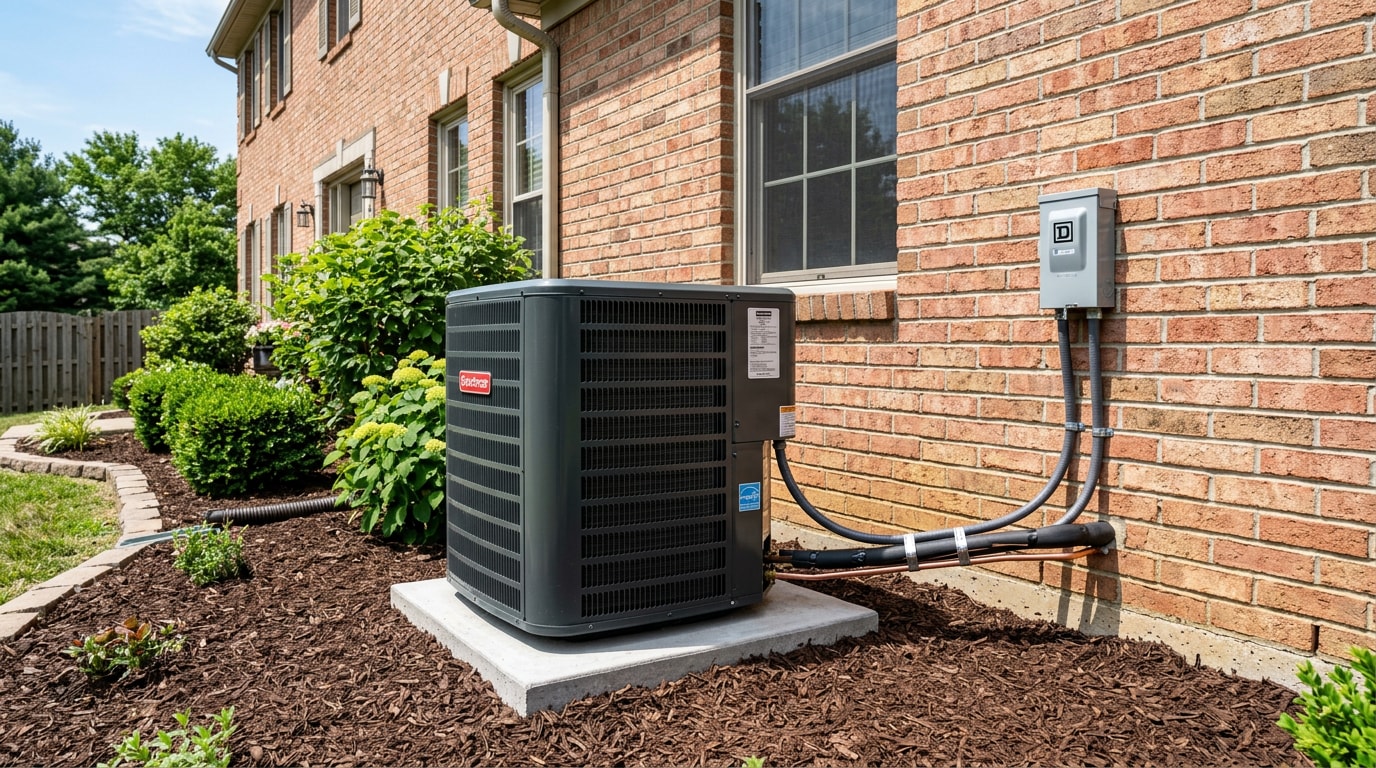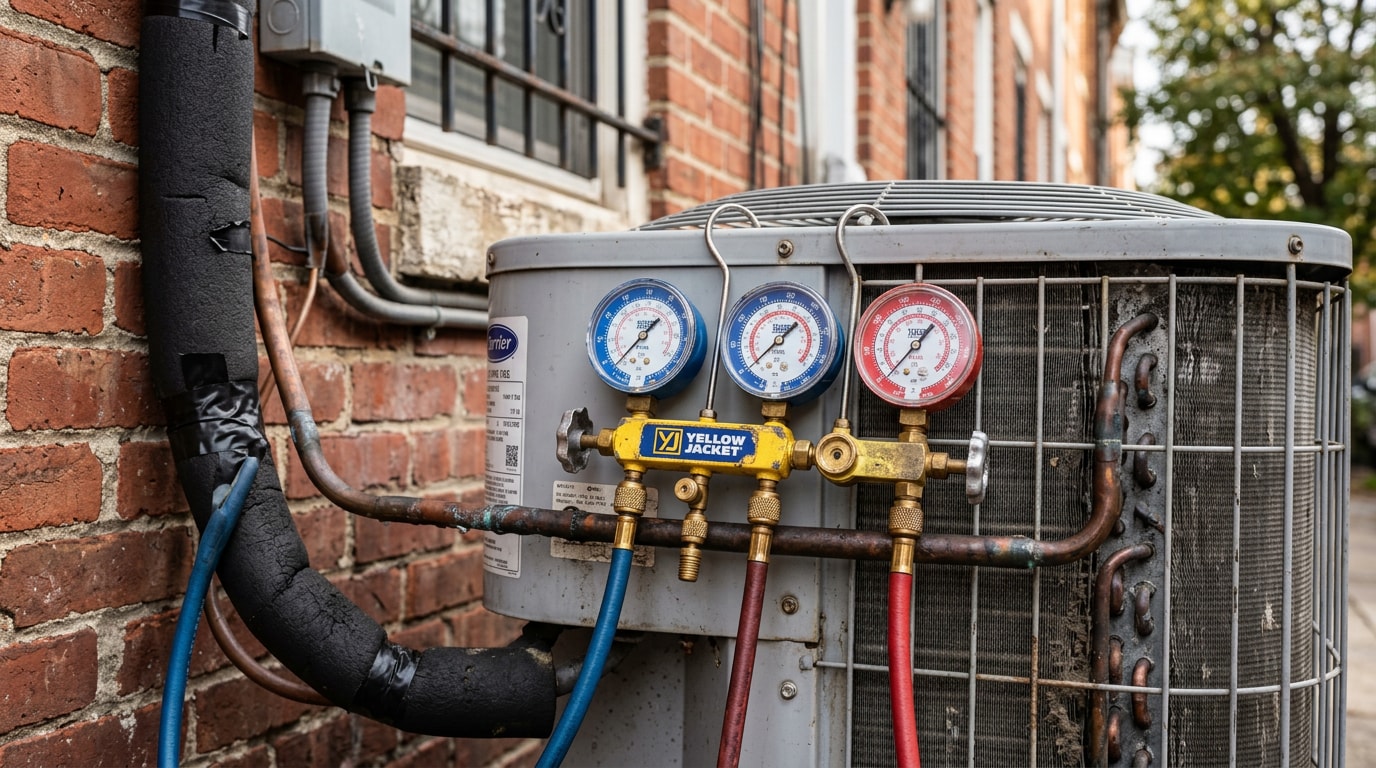
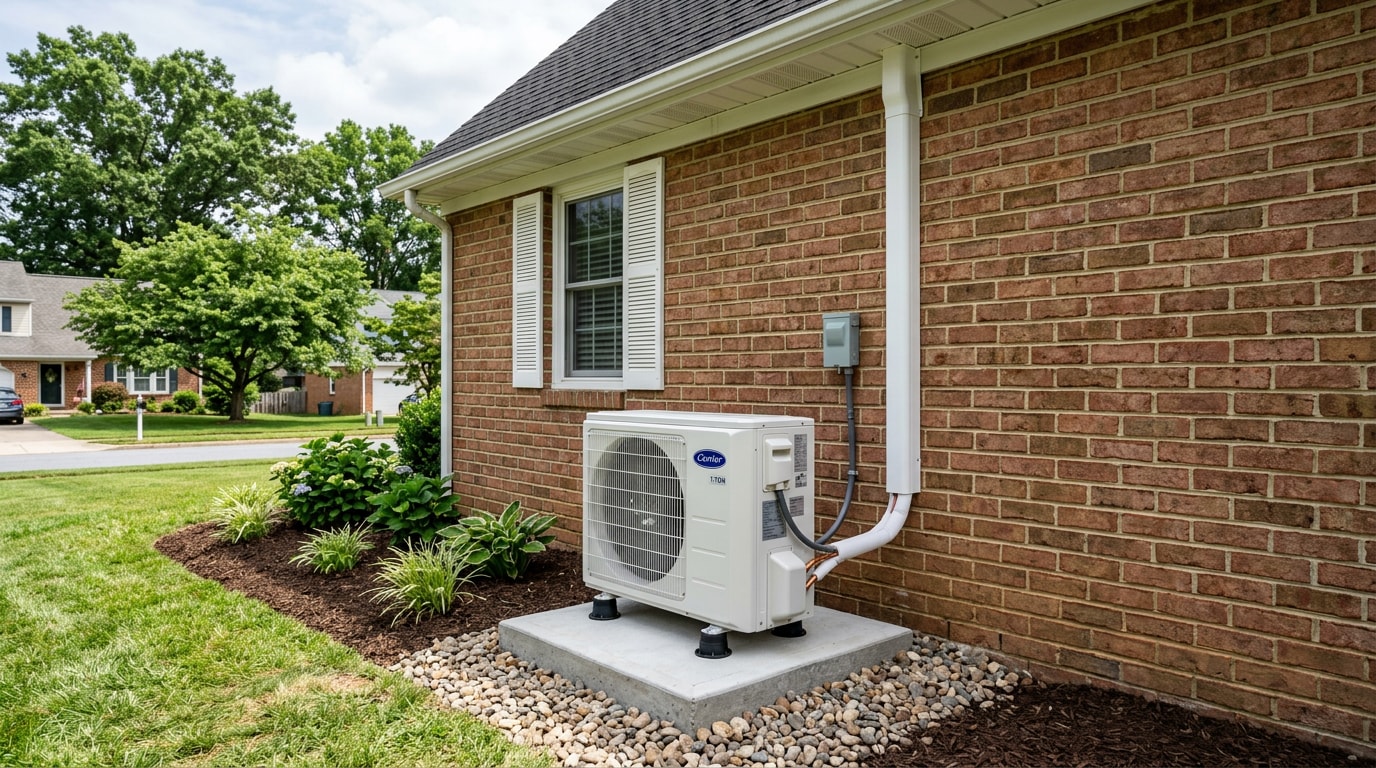
A 1 ton AC in Timonium, MD cools one room or a small addition, not a whole house, and sizing it wrong is the single most common mistake we see on service calls. This guide breaks down exactly how much space 12,000 BTUs covers, what installation actually costs around Baltimore County, and the one variable most online sizing charts leave out entirely.
What a 1-Ton AC Unit Actually Covers
A 1-ton air conditioner removes 12,000 BTUs of heat per hour, making it one of the smallest cooling capacities sold for residential use. It typically shows up as a window unit, a single-zone ductless mini-split, or occasionally a small packaged system, not as a central unit serving an entire house.
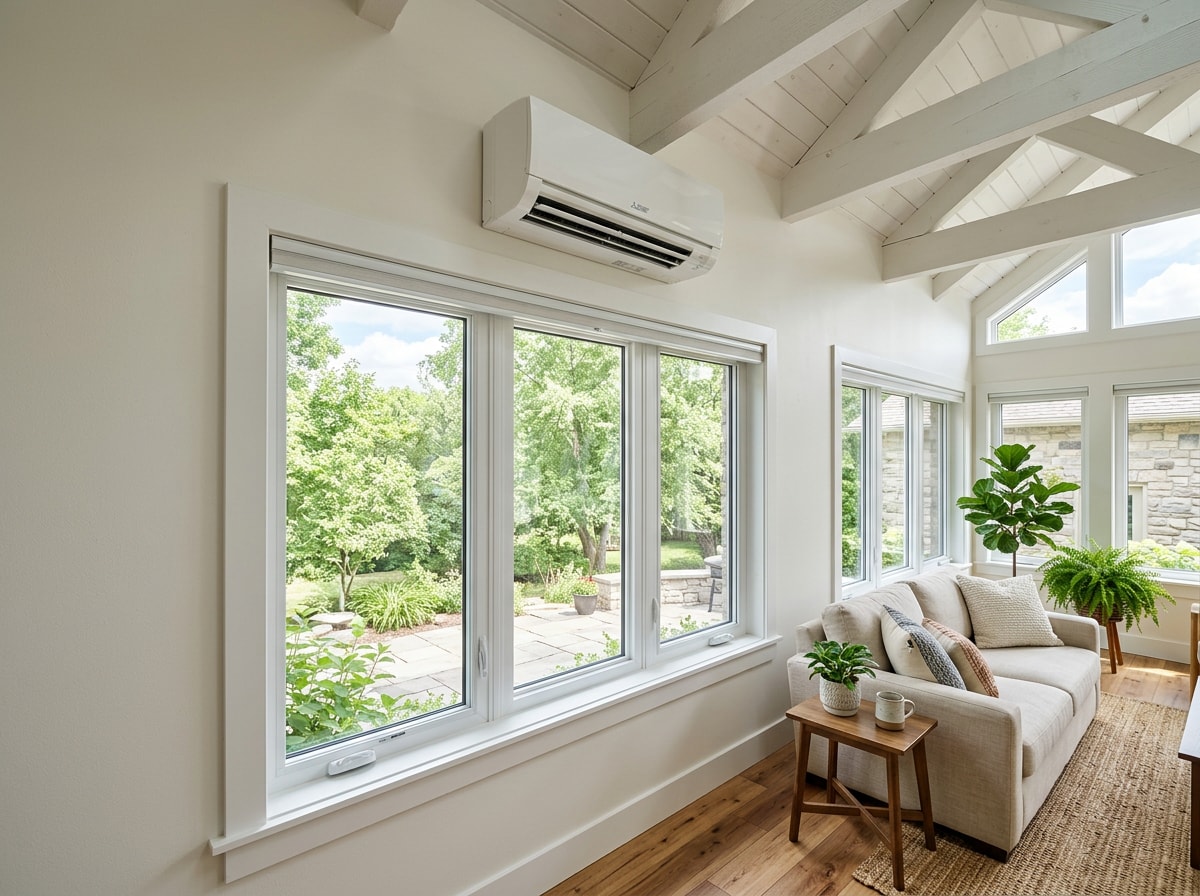
In Timonium, that capacity fits additions, finished basements, home offices, sunrooms, and condos, the kinds of spaces original ductwork never reached. On service calls in Lutherville sunrooms and Timonium basement conversions, we've repeatedly found the previous system undersized by a half-ton because someone matched the opening in a wall instead of running an actual load number.
When a 1-Ton Unit Is (and Isn't) the Right Call
- Good fit: a single bedroom, home office, sunroom, finished garage, or small basement zone
- Borderline: open-concept additions over 500 square feet with lots of glass or vaulted ceilings
- Wrong fit: an entire floor, a multi-room zone, or any space over roughly 600 square feet without serious insulation upgrades
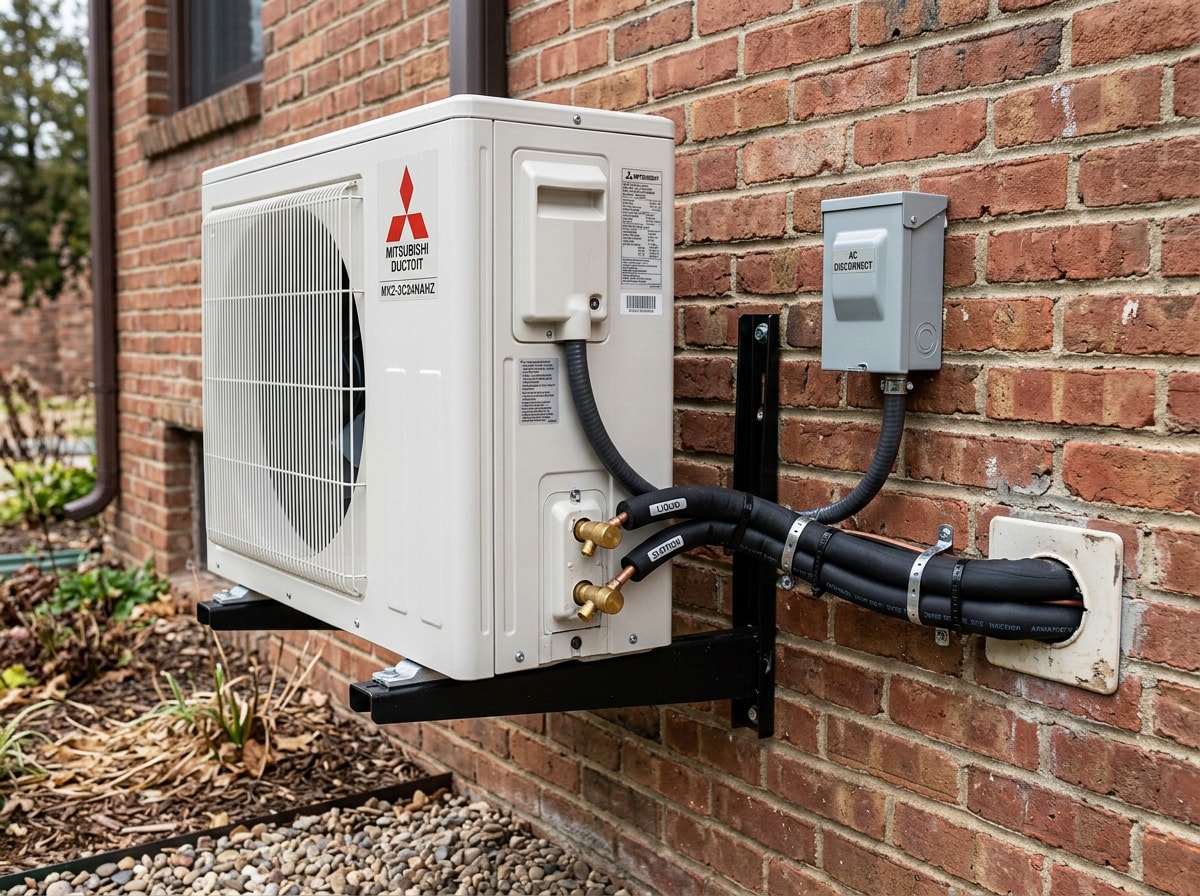
For these standalone spaces, a ductless mini-split installation is usually the simplest fix since it skips tearing into existing ductwork. If you're dealing with an existing mini-split that's already struggling, our ductless AC repair guide for Timonium homeowners walks through common failure points before you decide to replace anything.
How Much Space Will a 1-Ton AC Cool?
Energy Star's official room air conditioner sizing chart puts a 12,000 BTU unit at 450 to 550 square feet, assuming an 8-foot ceiling and average insulation. That's a tighter range than many blog posts quote, and it's worth checking against the Energy Star room air conditioner sizing guide directly before you buy.
Central and mini-split contractors use a looser rule of 400 to 600 square feet per ton, adjusted for climate zone, since ducted equipment performs a bit differently than a standalone window unit.
| Area to Be Cooled | Capacity Needed | Typical Equipment |
|---|---|---|
| 350–450 sq ft | 9,000–10,000 BTU | Small window unit |
| 450–550 sq ft | 12,000 BTU (1 ton) | Window unit, single-zone mini-split |
| 550–700 sq ft | 14,000 BTU (~1.2 ton) | Larger mini-split, needs load check |
| 700–1,000 sq ft | 18,000 BTU (1.5 ton) | Multi-zone mini-split or small central |
Here's a worked example for a typical Timonium addition: a 400-square-foot sunroom divided by 450 square feet per ton lands close to 0.9 tons, right in 1-ton territory. A 700-square-foot finished basement, by contrast, pushes past a single ton and likely needs 1.5 tons or a real load calculation to confirm.
Humidity Changes the Math More Than Most Charts Admit
Square-footage charts measure sensible heat, the temperature drop a unit produces. They don't account for latent heat, the moisture an AC pulls out of the air, which matters a lot more in Baltimore County's humid summers than it does in a dry climate.
An undersized 1-ton unit in a humid room short-cycles, cooling the air fast but shutting off before it removes enough moisture, leaving the space feeling clammy even at the right temperature. An oversized unit does the same thing for the opposite reason: it satisfies the thermostat too quickly to run a full dehumidification cycle. This is exactly why a proper Manual J calculation, which factors in humidity along with square footage, insulation, and window count, beats a flat BTU-per-square-foot rule every time for anything other than a simple single room.
What a 1-Ton AC Costs Installed in Timonium, MD (2026)
Pricing scales with tonnage, but not in a straight line. A 1-ton mini-split often costs less installed than a small central add-on of the same capacity, mainly because it skips ductwork.
| System Type | Typical Installed Cost Range |
|---|---|
| 1-ton window unit | $400–$1,000 |
| 1-ton ductless mini-split | $2,500–$5,000 |
| 1-ton central/packaged add-on | $3,000–$5,500 |
For comparison, a full central AC installation covering an entire home typically runs $3,700 to $7,000 nationally, according to HomeAdvisor's cost data, which helps explain why a single 1-ton zone costs so much less. Baltimore County labor rates, permit fees, and any electrical upgrades can push your specific total above or below these ranges, which is exactly why a written, in-home free estimate matters more than a ballpark number from the internet.
Major Cost Components in a 1-Ton Install
A typical quote breaks into a handful of pieces:
- Equipment — the condenser, indoor unit or coil, and line set
- Labor — mounting, line set routing, refrigerant charging, and startup
- Electrical work — a new circuit or disconnect if one doesn't already exist
- Permits — filed with Baltimore County when the scope requires it
- Disposal — removal of any old unit being replaced
What Pushes Your Quote Up or Down
Three factors drive most of the price swing on a 1-ton quote:
- System type — a window unit costs far less than a multi-head mini-split
- SEER2 rating — higher-efficiency equipment costs more upfront but less to run
- Install complexity — routing a line set through finished walls or adding a new circuit adds labor hours
The U.S. Department of Energy's current SEER2 efficiency standards set the federal minimum for new equipment, which affects what's available at the lower end of the price range. If your existing system is aging out rather than failing outright, it's worth comparing repair against full equipment replacement before you commit to either.
Sizing the Rest of the House
Many Timonium homes are split-levels or colonials built decades ago, often with inconsistent insulation and older single-pane windows in some rooms. A proper Manual J calculation weighs square footage, insulation quality, window count, ductwork condition, and climate zone, not just a flat ratio.
That combination usually means a 1-ton AC is right for an addition, home office, or single zone, not a whole house, where 2.5 to 4 tons is far more typical depending on square footage. A professional air conditioning repair or installation consultation can confirm the right size using actual load data instead of a rough estimate, and routine HVAC maintenance afterward keeps a correctly sized system running at its rated efficiency.
Permits for a 1-Ton AC in Baltimore County
Baltimore County requires a mechanical permit when ductwork is being installed or modified, or when the mechanical work isn't already covered by an existing building permit, according to the county's Mechanical HVAC System Permit page. A licensed contractor typically applies for this on your behalf rather than leaving it to the homeowner.
A simple like-for-like swap with no ductwork changes may fall outside that requirement, but confirming with the county before work starts avoids problems at resale or with your homeowner's insurance later.
If you're weighing a 1-ton AC against other home comfort projects this year, our HVAC quote pricing guide for Owings Mills breaks down how local dealer quotes are typically structured across the Baltimore metro, not just for this one tonnage.
About the Author
This guide was written and reviewed by the technical team at Best Mechanical, a licensed HVAC and plumbing contractor serving Timonium and the greater Baltimore County area. Our field technicians hold NATE certification and handle sizing, installation, and repair calls across Lutherville-Timonium, Cockeysville, and Towson year-round. Questions about your specific home? Contact us for a free, no-pressure estimate.
FAQ
How many square feet will a 1-ton AC unit cool?
A 1-ton AC unit typically cools 450 to 550 square feet according to Energy Star's sizing chart, or up to about 600 square feet under the looser central-system rule of thumb. Rooms with poor insulation or heavy south-facing sun exposure sit at the lower end of that range.
Is a 1-ton AC enough for one bedroom?
Yes, for most standard bedrooms. A typical 150 to 400 square foot bedroom falls comfortably within a 1-ton unit's capacity, though a room with vaulted ceilings or a lot of west-facing glass may need a load calculation to confirm.
What size electrical circuit does a 1-ton AC need?
Most 1-ton mini-splits and window units run on a dedicated 15- or 20-amp 115/230-volt circuit, depending on the model. An electrician or your HVAC installer should confirm the exact requirement against the unit's nameplate before installation.
How long do central AC units last?
A well-maintained central AC unit typically lasts 12 to 15 years. Neglected systems, or those without regular maintenance, often fail closer to the 7-to-10-year mark instead.
How much does it cost to install air conditioning?
Installed costs generally range from around $400 for a small window unit up to $7,000 or more for a full central system, depending on tonnage, ductwork, and installation complexity. The cost breakdown above covers exactly where that money goes for a 1-ton install specifically.
Is a permit required for AC replacement in Maryland?
Baltimore County requires a mechanical permit when ductwork is added or modified, or when the work isn't already covered under an existing building permit. A licensed HVAC contractor typically pulls that permit for you rather than leaving it to the homeowner.