Air conditioner freezing up in Pikesville, MD almost always traces back to one of two problems: blocked airflow or low refrigerant. One minute the house is cool, the next the vents are blowing warm air and ice is creeping up the refrigerant line outside. This guide walks through why it happens, how to thaw the unit safely, and the local factors that make Baltimore County homes especially prone to it.
Why Does an AC Freeze Up? (Common Causes)
A frozen evaporator coil is almost always a symptom of either blocked airflow across the coil or a drop in refrigerant pressure. Both conditions let the coil surface dip below freezing, turning normal condensation into ice instead of water. The four mechanical culprits below cover nearly every case homeowners run into.
Blocked Airflow
A dirty air filter, closed supply vents, or a blocked return grille all starve the evaporator coil of the warm air it needs to stay above freezing.
When airflow drops, the coil's surface temperature falls low enough for condensation to freeze instead of draining away. Pikesville's humid Mid-Atlantic summers make this worse. Heavy moisture in the air clogs filters faster than in drier regions, so a filter that looked fine in spring can be caked by August.
Low Refrigerant
A refrigerant leak lowers system pressure, which causes the coil to run colder than it should and ice over even with good airflow. Refrigerant isn't consumed like fuel. If a system is low, there's a leak somewhere in the line set or coil.
Refrigerant is also a federally regulated substance. Anyone who opens the refrigerant circuit to diagnose or recharge a system is legally required to hold EPA certification under Section 608 of the Clean Air Act for technicians who maintain, service, repair, or dispose of equipment that could release ozone depleting refrigerants into the atmosphere , which is exactly why this isn't a safe DIY project.
Dirty Evaporator Coils
Dust, pet hair, and grime that build up on the evaporator coil act like insulation, blocking the heat transfer that keeps the coil at a safe operating temperature. Once that exchange is disrupted, the coil can drop below freezing even with a clean filter and a proper refrigerant charge. Annual coil cleaning, usually done during a spring tune-up, keeps this from becoming a recurring issue.
Malfunctioning Blower Fan
A weak or failing blower motor can't push enough air volume across the coil, producing the same freezing effect as a clogged filter or blocked vent. Signs of a struggling blower include:
- Noticeably weak airflow at the vents
- A motor that runs louder than usual
- A system that short-cycles on and off
Because the symptoms overlap with airflow blockages, it's worth ruling out the simpler causes first.
How to Tell if Your AC Is Freezing Up
Watch for these signs together, not just one in isolation:
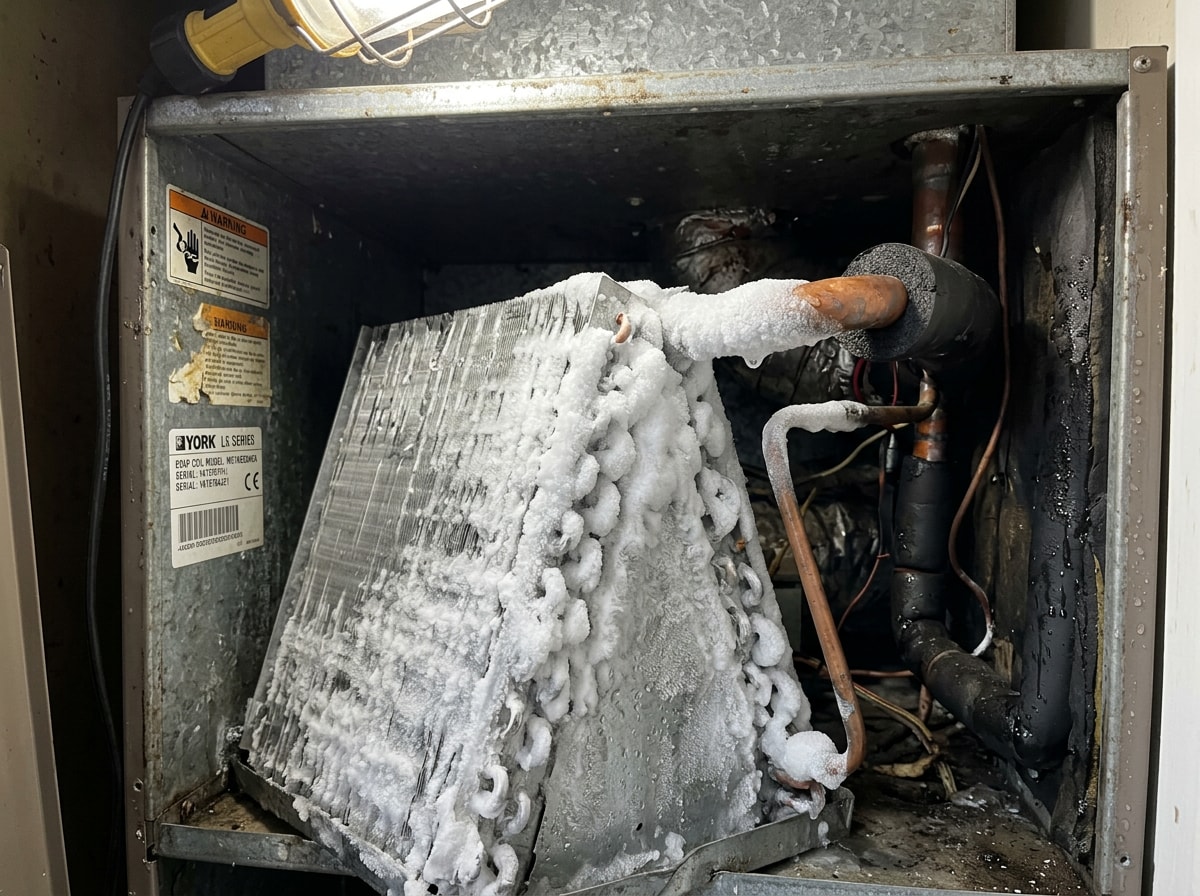
- Visible frost or ice on the refrigerant lines or indoor coil
- Warm air blowing from the vents instead of cool air
- Hissing or bubbling sounds near the indoor unit
- Water pooling around the equipment as the ice melts
Any one of these on its own is worth investigating, but seeing two or three together usually confirms a freeze-up rather than a different cooling problem, something especially common during Pikesville's stickiest summer stretches. Catching it early, before the coil is fully encased in ice, makes the thawing and repair process faster.
What Keeps Causing the Ice? (Recurring Freeze-Ups)
If the unit thaws out, runs fine for a day or two, then ices over again, the cause usually isn't a one-time clog. Recurring freeze-ups typically point to a refrigerant leak slowly draining the system's charge, or a chronic airflow problem like an undersized return duct that was never adequate for the home's cooling load.
One stat worth knowing: the EPA reports that 75% of installed air conditioners had the wrong amount of refrigerant when tested , and an undercharged system can lose roughly 21% of its efficiency even before ice ever forms . That means a freeze-up is often the visible symptom of a charge problem that's been quietly hurting performance for months. Homeowners dealing with an air conditioner that keeps freezing up in Pikesville despite a clean filter need a diagnostic visit, not another round of thawing and waiting.
What We See in Baltimore County / Pikesville Homes
Baltimore County's long, humid summers put extra strain on residential AC systems, and Pikesville's housing stock adds its own wrinkle. Many homes here were built decades ago with ductwork and return-air sizing designed for smaller cooling loads than today's central air systems demand, which chokes airflow right at the coil.
In our service calls across Pikesville's older sections, undersized return ducts cause more repeat freeze-ups than any single mechanical part failure. Homes with original 1960s and 70s ductwork tend to ice over more often than homes with updated systems, even when the equipment itself is relatively new. Humid air makes this worse: the EPA recommends keeping indoor relative humidity below 60 percent, ideally between 30 and 50 percent , and once indoor moisture climbs past that range, a coil already struggling with weak airflow has far more water vapor available to freeze. If that pattern sounds familiar, a local AC repair specialist can evaluate whether your ductwork is undersized for your current system.

How to Thaw It Safely (What to Do When Your AC Freezes Up)
Thawing a frozen AC correctly protects the compressor from damage that can happen if the system restarts while still iced over. The three steps below get the unit back online safely instead of rushing a restart that could turn into a much more expensive repair.
Step 1: Shut Off Your AC and Thaw
Turn the thermostat to "off" as soon as you notice ice, but leave the blower fan running if your thermostat allows a fan-only setting. This speeds up thawing by moving room-temperature air across the coil.
Restarting the compressor while the coil is still frozen forces it to work against solid ice, which can strain or damage it. Full thawing typically takes several hours, so patience here saves a bigger repair bill later.
Step 2: Dry
Once the ice has melted, wipe down the area around the indoor coil and check the condensate drain line and pan for standing water or debris. A clogged drain can cause water to back up and overflow once the system restarts, so clearing it now prevents a second problem before it starts.
Step 3: Find the Cause and Fix
With the system dry, work through the causes above: check and replace the filter, confirm vents and returns are open, and listen for hissing that might point to a refrigerant leak.
Simple airflow fixes are reasonable DIY tasks. Refrigerant leaks, coil cleaning, and blower motor repairs call for a trained technician. If you need a new filter or basic part and want to see options before calling for service, our guide to the air conditioning parts store in Pikesville, MD covers what's available locally. If the cause isn't obvious, a professional AC repair service can diagnose it correctly the first time.
What to Do Next
Once the unit is dry and the underlying cause addressed, it's generally safe to restart the system and monitor it for the next 24 hours. Keep an eye on vent temperatures and listen for unusual noise.
If the coil ices over again despite your fix, stop troubleshooting and schedule service with our Pikesville team rather than repeating the thaw cycle, which can mask a worsening refrigerant leak.
Tips to Prevent Future Air Conditioner Freezes
Most freeze-ups are preventable with a few routine habits:
- Replace the air filter every 60 to 90 days during cooling season, or more often with pets.
A dirty filter will slow down air flow and make the system work harder, and it can also lead to expensive maintenance or early system failure.
- Keep furniture and curtains away from supply and return vents.
- Avoid running the thermostat at very low temperatures for extended periods, since that can push even a healthy coil toward freezing.
- Schedule an annual professional tune-up, including a refrigerant check and coil inspection, to catch small issues before they turn into a frozen system.
An HVAC maintenance plan makes it easier to stay on that schedule year after year. You can see our full range of cooling services on the HVAC contractor page or start on our homepage to find the right fit for your home.
If your system is older and this isn't the first freeze-up this season, get a free estimate before the next heat wave puts more strain on it.
FAQ
Is It Common for an AC Unit to Freeze Up?
Yes, it's one of the more common seasonal HVAC complaints, especially during peak summer humidity. Most cases trace back to restricted airflow or low refrigerant, both covered above. While common, it's not something to ignore. Repeated freezing usually signals a problem that gets worse, not better, on its own.
What Is a Quick Fix for an AC That's Freezing Up?
The fastest safe fix is shutting the system off completely and letting the coil thaw fully, which can take several hours. While it thaws, check and replace the air filter if it's dirty. Restart afterward and see if cool air returns. If it freezes again quickly, the cause likely needs a technician rather than another DIY attempt.
How Long Should I Leave My AC Off After It Freezes Up?
Plan on leaving the system off for several hours, often overnight, to make sure the coil is completely thawed before restarting. Restarting too soon forces the compressor to run against remaining ice, which can turn a simple freeze-up into a costly compressor repair. A fan-only setting during this period speeds up the process safely.
Will a Frozen Air Conditioner Thaw on Its Own?
Yes, if you shut the system off and let it sit, the ice will melt on its own without any special equipment. The mistake most homeowners make is turning the AC back on too soon, before the coil has fully thawed, which just restarts the freezing cycle or strains the compressor.
What Is the $5,000 Rule for AC?
The $5,000 rule is a common HVAC industry guideline for deciding whether to repair or replace an AC unit: multiply the repair cost by the age of the system in years, and if the result tops $5,000, replacement is usually the more cost-effective choice. It's a starting point, not a hard rule. ENERGY STAR advises homeowners to consider replacement once a heat pump or air conditioner is more than 10 years old , and a technician's assessment of the unit's overall condition matters just as much as the math.
Can an Overworked Air Conditioner Freeze?
Yes. Running an AC nonstop during extreme heat, or relying on a unit that's undersized for the home, can cause coil freezing even with no mechanical fault. The system simply can't keep up, and prolonged low-temperature operation can bring the coil down to freezing over time.