Searching for heating and air service near me in Baltimore, MD usually means something already broke: a furnace that won't fire on a cold morning or an AC blowing warm air in July. This guide covers what local repair and installation actually cost in 2026, how to vet a Baltimore HVAC contractor before they step inside your home, and the licensing rules that protect you either way. If you'd rather skip ahead, you can get a free estimate from our team right now.
Our Heating and Air Conditioning Services in Baltimore, MD
From emergency no-heat calls to full system replacements, these are the services we run most often across Baltimore's rowhouses, cape cods, and newer county homes. Browse the full lineup on our HVAC contractor page, or jump to the service you need below.
AC Repair
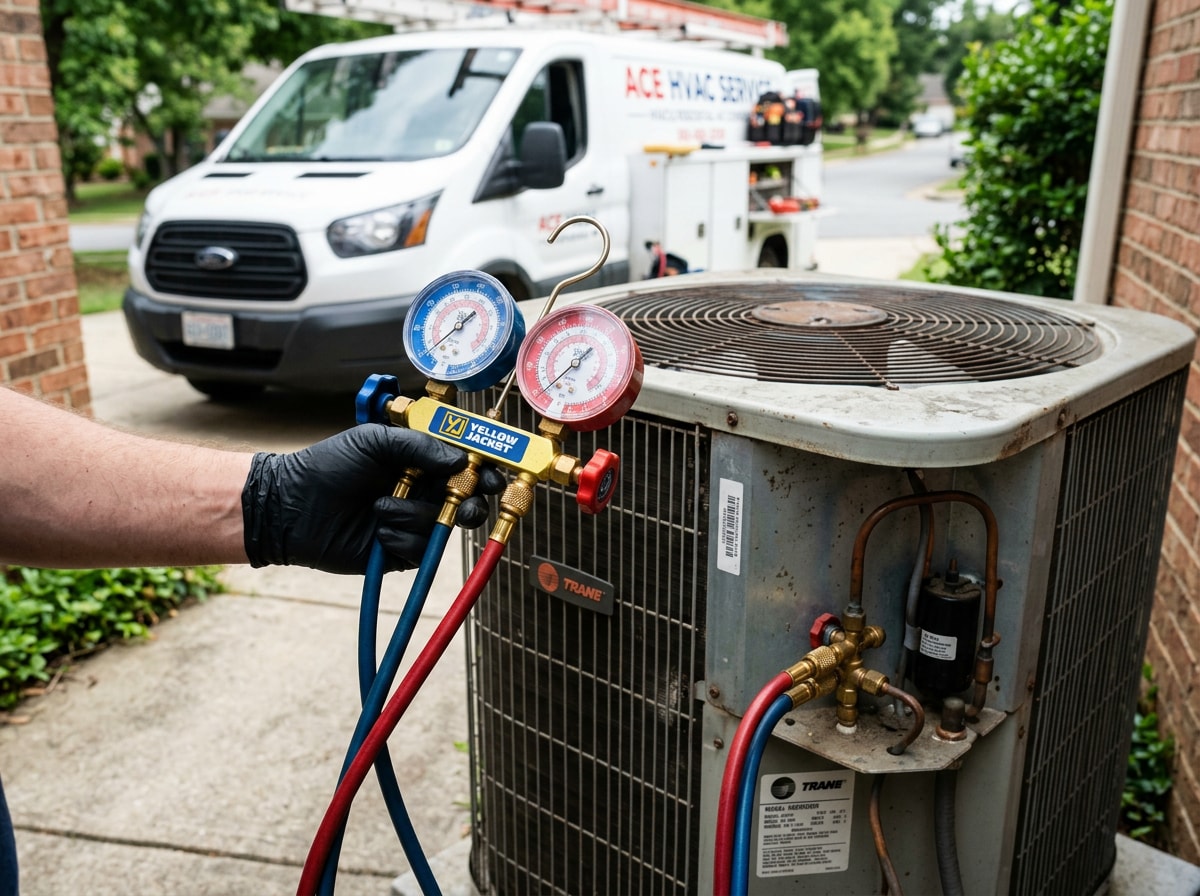
Common complaints we hear: the unit runs but doesn't cool, it short cycles every few minutes, or there's visible ice on the refrigerant line. A diagnostic visit checks refrigerant charge, electrical connections, and airflow across the coil before any part gets replaced.
Air conditioning repair calls become same-day priorities during peak summer heat, especially if a system won't turn on at all. If you've already had a recharge done and want to know what it should have cost, our AC recharge cost breakdown for Baltimore walks through real pricing ranges.
AC Installation & Replacement
A system past 12 to 15 years old, needing frequent repairs, or still running on R-22 refrigerant is usually a better candidate for replacement than another patch job. New installs start with a load calculation based on square footage, insulation, and window exposure, not a guess based on the old unit's tonnage.
See our HVAC equipment installation page for how proper sizing affects comfort and energy use.
Furnace Repair
Baltimore winters push furnaces hard. The issues we see most are ignition failures, pilot light problems on older units, and clogged filters restricting airflow. A no-heat call gets treated as urgent, especially overnight in January.
Any furnace repair visit for a gas unit should include checking the heat exchanger for cracks. That's a carbon monoxide safety issue, not just a performance one.
Furnace Installation & Replacement
Most furnaces last 15 to 20 years with regular maintenance, though efficiency drops in the final few seasons. When replacing one, ask about the AFUE rating since higher-efficiency models cost more upfront but lower monthly gas bills.
Compare options through our HVAC equipment replacement page, or see how heating systems stack up in our most efficient heating system comparison for Dundalk.
Heat Pump Repair
Heat pumps have become a common all-electric alternative to separate furnace-and-AC setups across Maryland. Heat pump repair calls are usually triggered by refrigerant leaks, a failing reversing valve, or a frozen outdoor coil in winter.
A heat pump that seems to blow cool air during a cold snap isn't necessarily broken. Many models lean on backup electric heat strips during extreme cold, and that transition can feel like a malfunction when it isn't one.
Heat Pump Installation & Replacement
Baltimore's moderate winters make heat pump installation practical for a lot of homes, since the technology handles the region's climate without excessive backup heat use. Dual-fuel systems, which pair a heat pump with a gas furnace for backup, are worth asking about if you want lower bills with extra cold-weather reliability.
Our HVAC equipment replacement team can walk through whether a straight heat pump or a dual-fuel setup fits your home better.
Ductless Mini-Split Installation & Repair
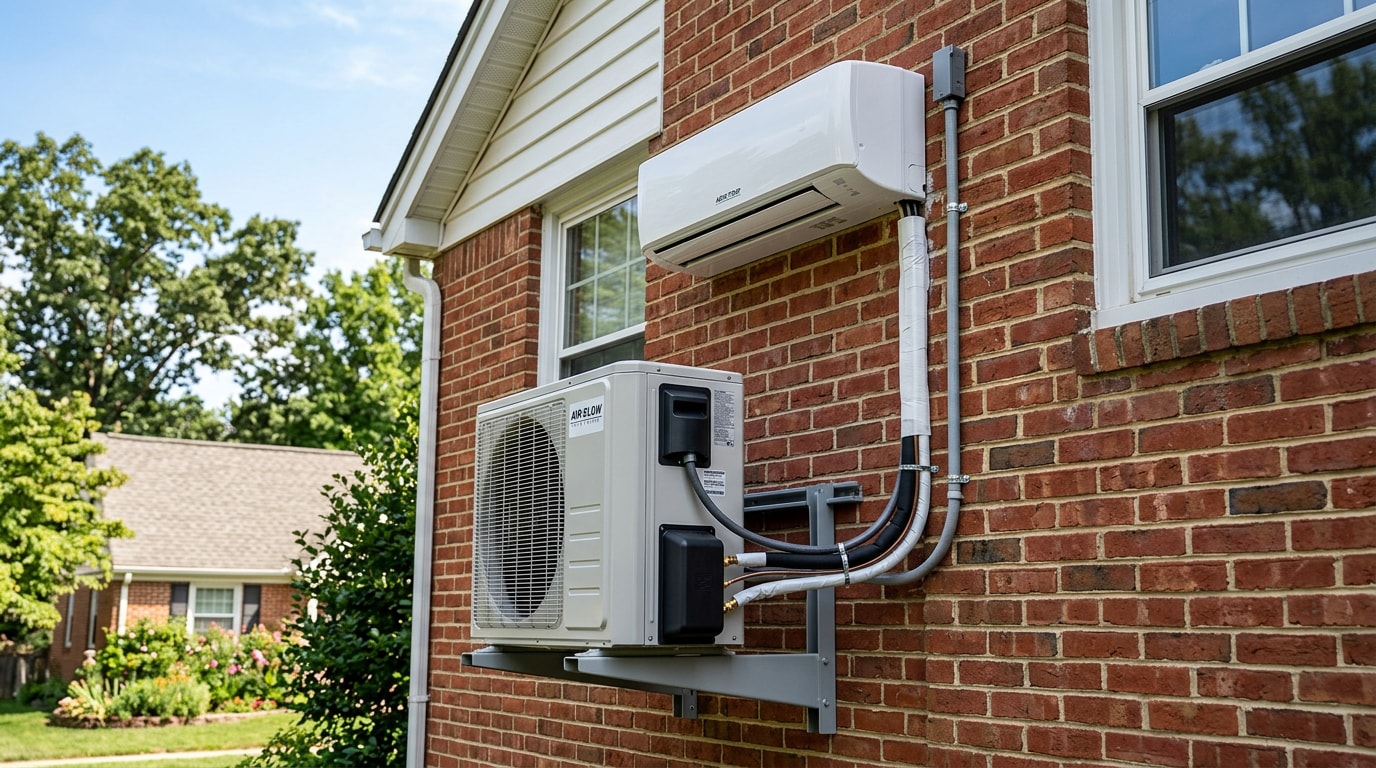
Ductless systems work well for additions, garages, sunrooms, and older Baltimore homes that never had central ductwork. Installing one avoids the cost and disruption of cutting ducts into a house that was never built for them.
Mini-split installation typically takes one to two days per zone. Repair calls are usually tied to a clogged condensate line or a refrigerant issue in the line set connecting indoor and outdoor units.

Indoor Air Quality Services
Baltimore's humid summers make indoor air quality solutions worth pairing with a standard HVAC system. A whole-home humidifier helps in winter when heated air dries out indoor spaces, while a dehumidifier tackles the sticky, mold-prone humidity of July and August. The EPA notes that the use of portable air cleaners and higher efficiency HVAC filters can supplement improvements from source control and improved ventilation , which is worth knowing before buying an add-on purifier you don't need.
Browse our indoor air quality assessment and HVAC maintenance services to see which option fits your home.
Why Baltimore Homeowners Choose Best Mechanical
Baltimore has no shortage of HVAC companies, but not all of them carry the same credentials or local track record. Technician certifications, manufacturer training, and years working on the region's specific housing stock separate a dependable contractor from one that's just passing through.
NATE-certified and factory-trained. NATE certification verifies a technician passed rigorous testing on HVAC systems, not just a training course. It affects diagnostic accuracy and repair quality on the first visit, and keeps manufacturer warranties valid.
Serving Baltimore since 1994. Three decades of working inside rowhomes, cape cods, and older suburban housing teaches a contractor things a newer company hasn't run into yet, like narrow duct chases and permitting quirks specific to the city and county. On a typical July dispatch, our techs see more frozen evaporator coils in older Pikesville and Towson rowhomes than anywhere else in the county, almost always traced back to an undersized return duct choking airflow rather than a failing compressor.
That kind of pattern recognition only comes from doing this work locally, year after year. You can see our full range of work on the Best Mechanical homepage.
How to Choose a Heating and Air Service Near You
Choosing a reliable HVAC company in Baltimore comes down to confirming a few things before any work begins:
- Active Maryland HVACR license. Ask for the license number and check it against the state registry. A legitimate contractor won't hesitate to share it.
- Proof of liability insurance. This protects you if something goes wrong during the job, not just the technician.
- A written estimate, not a verbal quote. This protects you if the scope of work changes mid-project.
- Clear emergency response time. A company that takes three days to return a no-heat call in January isn't one you want on retainer.
- Recent, independent reviews, not just the testimonials featured on the company's own site.
Skipping this step is the most common reason homeowners end up with a bad installation or an overpriced repair.
Average Heating and Air Service Costs in Baltimore, MD
Costs vary by system size, ductwork condition, and brand, but these are rough 2026 ranges for the most common calls. Use them to plan a budget, not as a quote. A technician still needs to see your setup before pricing anything firm.
| Service | Repair | Full Replacement | Routine Tune-Up |
|---|---|---|---|
| Air Conditioner | $150 - $650 | $4,800 - $9,800 | $89 - $150 |
| Furnace | $175 - $750 | $3,900 - $8,600 | $89 - $150 |
| Heat Pump | $200 - $900 | $5,200 - $11,500 | $100 - $175 |
Installation costs tend to run higher in Baltimore's older rowhomes because existing ductwork often needs modification to handle modern airflow requirements. Humidity plays a role too: undersized systems short-cycle constantly in a Maryland summer, which drives up both repair frequency and long-term energy bills.
Ready to get an actual number instead of a range? Request a free estimate and a technician will price your specific system.
Maryland HVAC Licensing Rules and the 2026 Tax Credit Update
Maryland requires anyone installing, repairing, or servicing heating and cooling equipment to hold an active license. All individuals providing heating, ventilation, air conditioning and refrigeration services in the State of Maryland must be licensed by the Maryland Board of HVACR Contractors . This exists to confirm a contractor has met minimum technical competency and insurance requirements before working inside someone's home.
The bar has gotten higher in recent years, too. The Maryland Board of HVACR Contractors raised the journeyman license experience requirement from 1,875 hours to 6,000 hours, and the minimum apprenticeship from 3 years to 4 years , one of the more demanding thresholds in the country. Before hiring, confirm the company's license number matches the business name on the estimate through the Maryland Department of Labor HVACR licensing portal.
One thing worth correcting before you budget: the federal 25C tax credit that used to cover a chunk of a heat pump, furnace, or AC replacement is gone for 2026 installs. Under the One Big Beautiful Bill Act, the credit will not be allowed for any property placed in service after December 31, 2025 . If your system was installed and running before that date, you may still be able to claim it on a 2025 return, but anything installed this year doesn't qualify. State and utility rebates are separate programs and may still apply, so it's worth asking your installer what's currently active locally.
If you're comparing heat pump efficiency ratings while that credit question gets sorted out, the Department of Energy requires a minimum of 14.3 SEER2 for residential air-source split systems as of 2023, which is a useful baseline for judging whether a quoted unit is actually efficient or just average.
How We Work: From First Call to Finished Repair
- Call for service. Reach out by phone or online request. We aim for same-day service when possible, especially for no-heat or no-cool emergencies.
- On-site evaluation. A technician runs a full diagnostic and explains findings in plain language, covering the equipment, ductwork, and any safety concerns.
- Upfront pricing before work starts. Once you approve the plan, the price is locked in before any tools come out.
- Follow-up support. Every repair and installation comes with warranty details explained upfront, and we're reachable if something doesn't feel right after the visit.
Areas We Serve Near Baltimore, MD
Beyond Baltimore itself, we regularly serve homeowners throughout Towson, Dundalk, Pikesville, Timonium, Cockeysville, Owings Mills, Rosedale, Parkville, and Perry Hall. Each community has its own mix of housing ages and duct configurations, which our technicians get familiar with from routine calls rather than a single job.

Searching for HVAC near you usually means wanting someone who already knows the neighborhood's typical setup, not a crew learning your home's quirks for the first time. If your home also needs plumbing attention alongside HVAC work, we handle gas line repair and water heater replacement too.
Frequently Asked Questions
What is the $5,000 rule for air conditioners?
It's a repair-versus-replace formula, not a tax credit threshold. Multiply your system's age in years by the cost of the repair estimate. If the result is under $5,000, repair is usually the better financial call; if it's over $5,000, replacement tends to make more sense. It's a widely used industry rule of thumb rather than an official standard, so pair it with a technician's read on the equipment's actual condition before deciding.
Is there still a federal tax credit for a new HVAC system in 2026?
No. The federal Section 25C credit expired for any equipment placed in service after December 31, 2025. If your system went in before that date, you may still claim it on your 2025 return. For 2026 installs, check with your installer about current state or utility rebates instead, since those are separate programs that may still be active in Maryland.
Why is my furnace making noises?
It depends on the sound. Banging usually points to delayed ignition. Squealing often signals a worn blower belt or motor bearing. Rattling can mean loose panels or ductwork. Most noise issues are worth a troubleshooting visit, since banging in particular can indicate a safety concern rather than routine wear.
What is the difference between a heat pump and an air conditioner?
A heat pump both heats and cools a home by moving warm air indoors or outdoors depending on the season. A standard air conditioner only cools. This difference affects upfront cost, year-round efficiency, and whether you need a backup heat source for cold snaps.
How long does a typical HVAC system last?
Air conditioners and heat pumps generally last 10 to 15 years. Furnaces run 15 to 20 years. All of those ranges assume regular maintenance; skipping annual tune-ups tends to shorten them, not extend them.
Do I need a whole-home humidifier or dehumidifier in Baltimore?
It's not strictly necessary for every home, but Baltimore's humid summers and dry winters make it worth considering. A whole-home dehumidifier helps control mold and musty odors in summer, especially in finished basements. A humidifier reduces dry skin and static during heating season. It's most worthwhile for homes with noticeable comfort complaints rather than a universal add-on.
Have a system acting up right now? Contact Best Mechanical and we'll get a technician out to your Baltimore-area home.