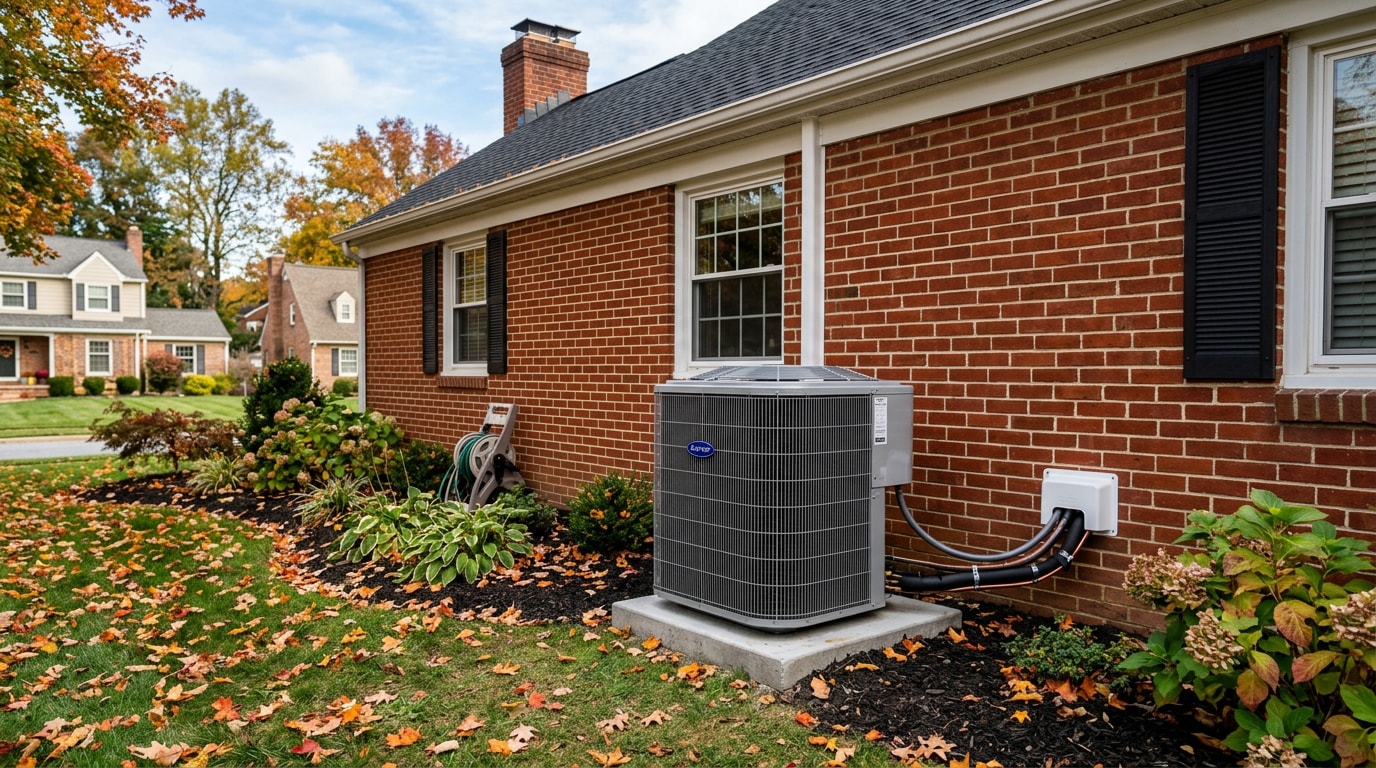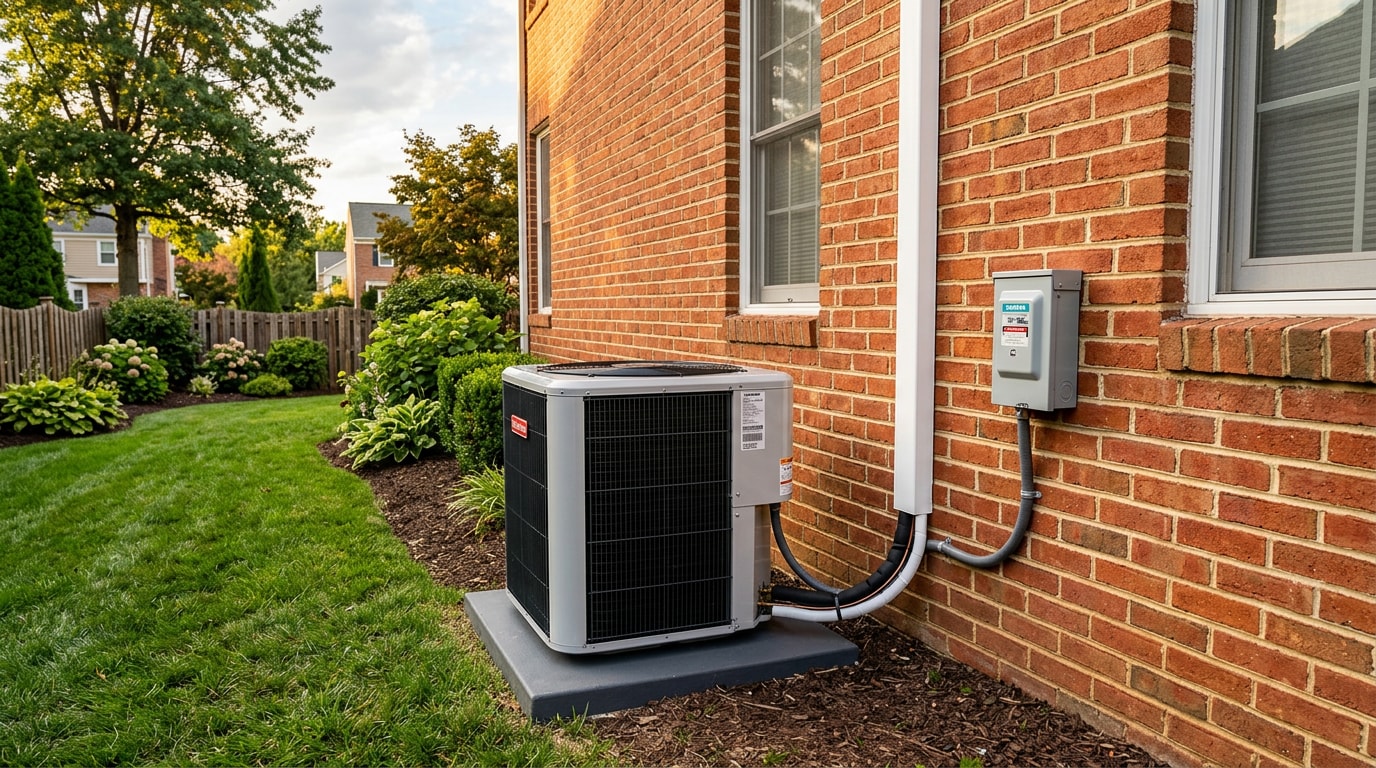
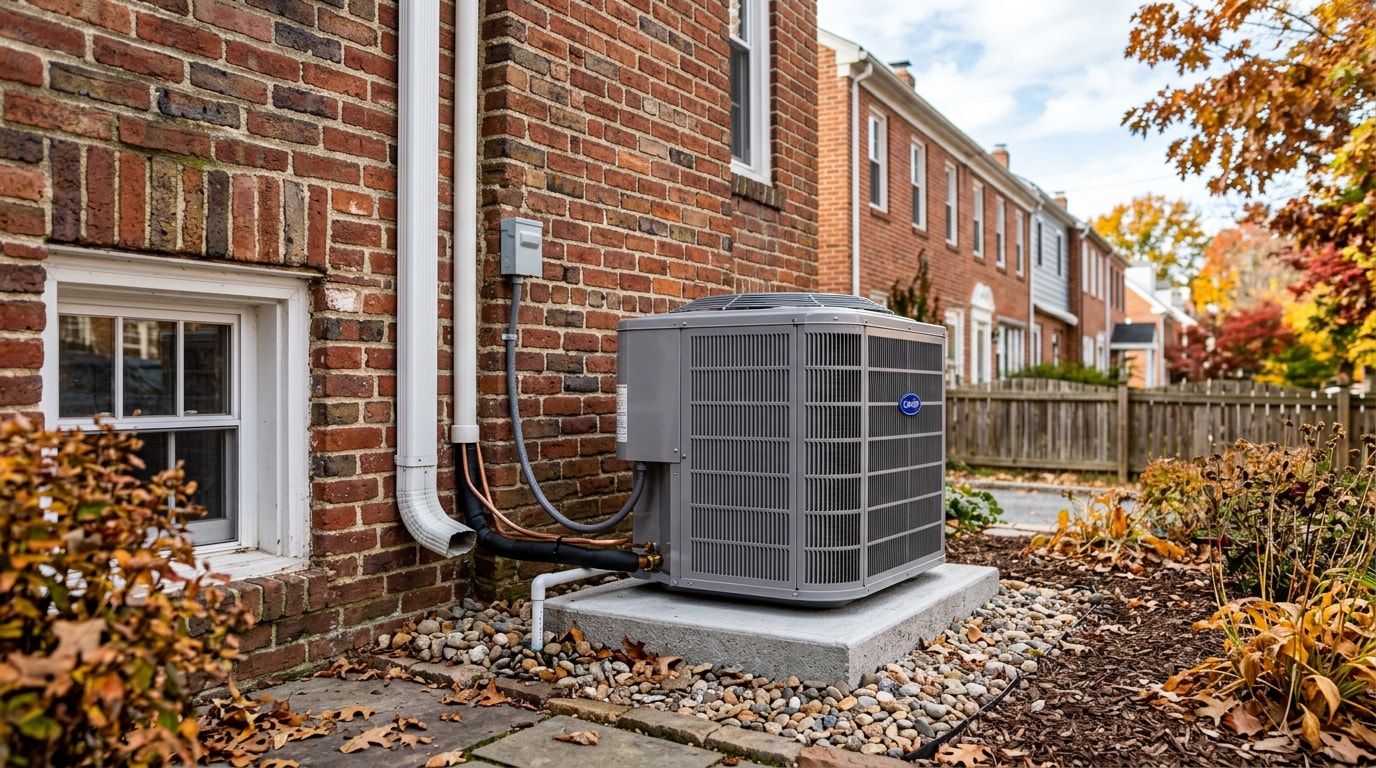
The most efficient heating system for a Dundalk, MD home depends on your ductwork, your budget, and how your house handles the Chesapeake region's damp, swing-season winters. A spec sheet alone won't tell you that. This guide compares furnaces, heat pumps, mini-splits, and hybrid systems against the realities of Dundalk's older housing stock, so you can see what actually pays off here.
Visit Best Mechanical Inc to see our services and request a free estimate.
Why Dundalk's Climate and Housing Stock Complicate the Decision
Dundalk sits close enough to the Chesapeake Bay that humidity plays a bigger role in comfort than it does further inland. Winters swing between mild, damp stretches and sharp cold snaps, which stresses equipment differently than a steady, dry climate would.
Housing stock adds another variable. Many Dundalk homes date to the 1940s through 1960s, with original ductwork, limited insulation, or no ducts at all in additions and finished basements. A rowhome with uneven duct runs behaves very differently than a newer single-family build, which is why a one-size-fits-all recommendation rarely holds up on this side of Baltimore County.

Which Heating System Is Most Efficient? Comparing the Four Main Options
Four system types cover most residential setups in the Dundalk area, each with a distinct efficiency profile.
| System Type | Efficiency Metric | Typical Range | Best Fit |
|---|---|---|---|
| Gas furnace | AFUE | 80% to 98% | Homes with intact ductwork, natural gas access |
| Air-source heat pump | SEER2 / HSPF2 | 14.3+ SEER2 / 7.5+ HSPF2 (cold-climate models run higher) | Moderate climates, year-round heat and cool in one system |
| Ductless mini-split | SEER2 / HSPF2 | Varies by zone, often 16+ SEER2 | No-duct additions, basements, converted attics |
| Hybrid dual-fuel | Blended | Heat pump most of the season, furnace backup in deep cold | Homeowners who want efficiency without losing cold-snap reliability |
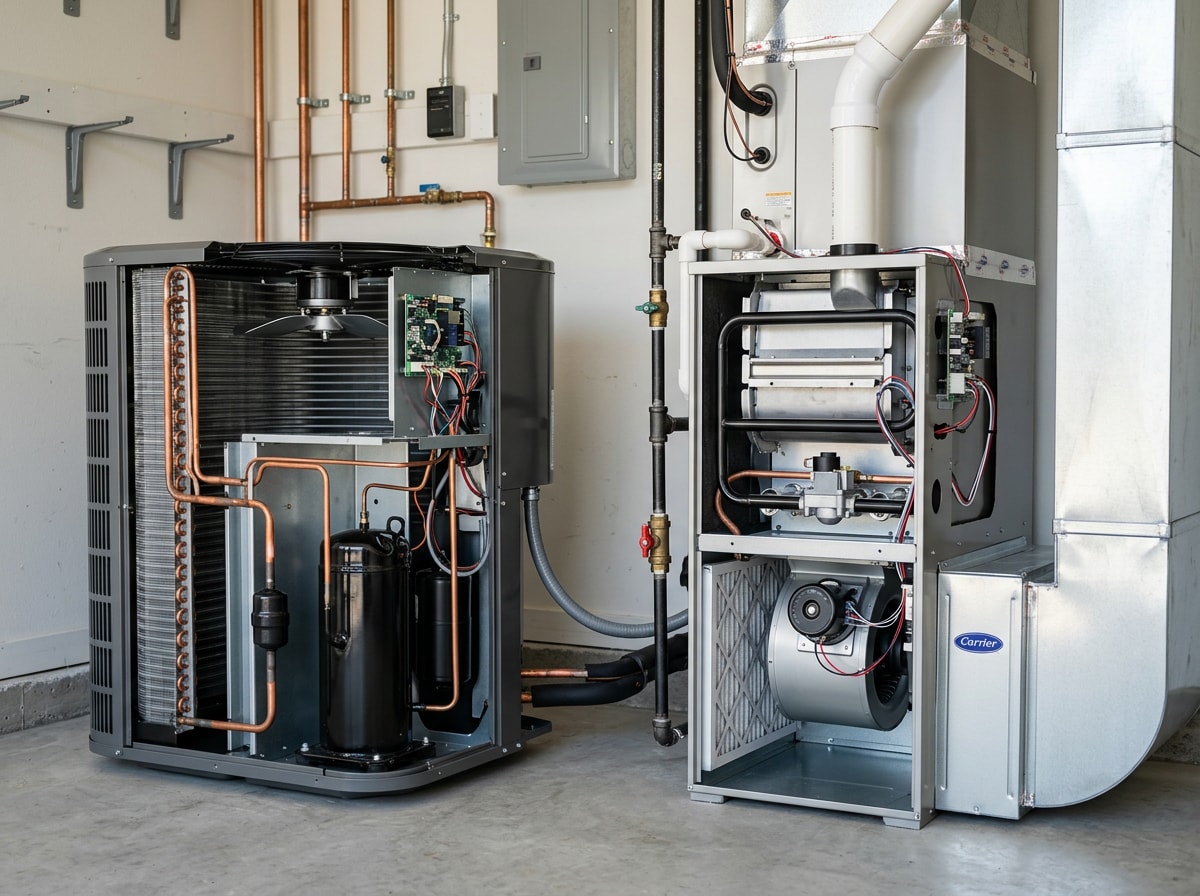
Central Forced-Air Systems (Furnace + AC)
A forced-air system pairs a furnace with central air through a shared duct network. In Dundalk's older homes, that furnace is often a legacy oil unit, though gas furnace conversions have become common as natural gas lines reach more of the neighborhood.
Here's a number most local contractor pages won't mention: the federal efficiency floor for gas furnaces is about to jump. Standards taking effect in late 2028 require non-weatherized gas furnaces and those used in mobile homes to achieve an annual fuel utilization efficiency of 95 percent. That's up from the 80% minimum that's been in place for years, and it effectively pushes the entire market toward condensing furnace technology. If you're planning a replacement in the next two to three years, it's worth asking your contractor how that timeline affects pricing and parts availability on older 80% AFUE equipment.
Heat Pumps
A heat pump doesn't generate heat the way a furnace does. It moves heat from outside air into the home, even in cold weather, which is what gives it an efficiency edge.
Split-system heat pumps installed under the current nationwide minimum standard must hit at least 14.3 SEER2 and 7.5 HSPF2. That's the floor, not the ceiling. For homeowners who want a heat pump that holds up through a true cold snap, ENERGY STAR's Cold Climate designation sets a much higher bar.
Non-ducted split heat pumps need at least 15.2 SEER2 and 8.5 HSPF2 to earn that label, while ducted split systems need 15.2 SEER2 and 8.1 HSPF2. The designation also requires real low-temperature proof, not just a lab average. Qualifying units must demonstrate a coefficient of performance (COP) of at least 1.75 at 5°F and retain at least 70% of their 47°F heating capacity at that same temperature. For context on what to ask a contractor about, ENERGY STAR's own buying guidance for air-source heat pumps walks through cold-climate considerations in plain language.
The tradeoff: performance still declines in extreme cold without that cold-climate certification, and electric heating costs depend on local utility rates, so "cheaper to run" isn't universal. For most Dundalk winters, though, a quality cold-climate heat pump tends to out-earn a standard furnace on efficiency.
Ductless Mini-Splits
A ductless mini-split delivers zoned heating and cooling directly to individual rooms without a central duct network. That makes it a practical fit for additions, converted attics, or finished basements, which are common in Dundalk's older housing stock, where running new ductwork isn't realistic.
Because each zone operates independently, homeowners only condition the rooms they're using. For a closer look at what installation actually involves in this market, our guide to AC mini splits in Dundalk, MD breaks down costs and install options specific to this area.
Hybrid Dual-Fuel Systems
A hybrid system pairs a heat pump with a backup furnace. The heat pump handles the bulk of heating during mild and moderately cold weather, when it's most efficient, and the furnace kicks in only during deep cold snaps.
This setup gives Dundalk homeowners the efficiency of a heat pump most of the year without sacrificing the reliability of a backup furnace when temperatures drop hard in January or February.
Efficiency Ratings Explained: AFUE, SEER2, HSPF2, and COP
Knowing the system types is only half the picture. The other half is understanding what the ratings on the spec sheet actually measure.
- AFUE (furnaces): the percentage of fuel converted into usable heat, as opposed to lost up the flue.
- SEER2: seasonal cooling efficiency, measured under updated DOE test conditions.
- HSPF2: seasonal heating efficiency for heat pumps.
- COP: a snapshot ratio of heat output to electricity consumed at a specific outdoor temperature, most meaningful at the cold end of the scale.
A higher number generally means lower operating costs, but ratings alone don't guarantee savings. A high-SEER2 heat pump paired with leaky ducts, poor insulation, or incorrect sizing can underperform its rating significantly. A proper home system evaluation before you buy tells you whether your house can actually deliver the numbers on the label.
Why Maryland's Heating-Season Timing Matters
Maryland's heating season runs longer than its true deep-winter stretch, with extended shoulder seasons in fall and spring where moderate heat pump performance really shines. Scheduling a heat pump repair or system evaluation before the first cold snap, rather than during it, gives a technician time to check seasonal efficiency without the pressure of an emergency call.
Tank vs. Tankless Water Heaters: Which Wastes Less Energy?
Water heating is a smaller slice of a home's total energy use than space heating, but it's a real one. Water heating is responsible for roughly 13% of both annual residential energy use and consumer utility costs. A standard tank water heater keeps a reservoir of water hot around the clock, which means standby heat loss even when no one's using hot water.
| Factor | Tank Water Heater | Tankless Water Heater |
|---|---|---|
| Standby loss | Continuous, water stays hot 24/7 | Minimal, heats only on demand |
| Typical lifespan | 10 to 15 years |
20 years, much longer than any conventional tank-type water heater
| Footprint | Floor-standing, larger closet | Wall-mounted, compact |
| Upfront cost | Lower | Higher, especially with venting upgrades |
By heating water only when needed, ENERGY STAR certified tankless models can save a family of four roughly $95 per year, or about $1,800 over the appliance's lifetime, compared to a standard gas storage water heater. Full details on how those savings are calculated are on ENERGY STAR's tankless water heater page. If your current tank is past 10 years old, a water heater replacement consultation can confirm whether tankless makes sense for your household's hot water demand.
Matching the System to Your Dundalk Home
The most efficient heating system on paper isn't always the most efficient one for your house. Home layout, existing ductwork, budget, and how long you plan to stay all factor into the real answer.
A few quick markers worth checking before you decide:
- Intact, sealed ductwork? A central heat pump or forced-air upgrade can likely reuse it.
- Leaky, undersized, or missing ducts? A ductless mini-split or zoned hybrid usually beats tearing out walls for new runs.
- No recent load calculation? Get one. Oversized and undersized systems both run less efficiently than their rating suggests.
- Furnace older than 15 years? Start pricing HVAC equipment replacement now, before the 2028 AFUE floor pushes parts and pricing for older units.
A proper assessment goes beyond square footage. It should include insulation levels, window condition, duct leakage testing, and a Manual J load calculation to size equipment correctly. Skipping this step is one of the most common reasons an otherwise efficient system underperforms.
How Long Should an HVAC System Last in Dundalk?
Furnaces typically last 15 to 20 years, while heat pumps run 10 to 15 years , with maintenance, airflow, and climate all affecting where a system lands in that range. Maryland's coastal humidity can shorten those numbers if systems aren't serviced regularly. Salt-tinged, moisture-heavy air near the Bay accelerates coil corrosion on outdoor components faster than in drier inland climates.
In nearly two decades of service calls across Baltimore County, our technicians see the same pattern again and again: systems that get annual coil cleaning and refrigerant checks routinely outlast their rated lifespan, while neglected units fail years early, usually right during the first real cold snap or heat wave. Annual maintenance helps sustain efficiency over a system's full lifespan rather than letting performance quietly degrade year over year. For a deeper breakdown of what shortens or extends equipment life, Carrier's HVAC lifespan resource is a solid reference point.
Routine HVAC maintenance is the single cheapest way to protect the efficiency rating you paid for.
Trust Signals: What to Look for in a Dundalk HVAC Contractor
Efficiency ratings only matter if the installation is done correctly, which makes contractor selection part of the efficiency equation. Look for a licensed HVAC contractor with active state licensing and insurance you can verify directly, not just a claim on a website.
Manufacturer certifications signal that technicians have completed specific training on the equipment they're installing, which matters for heat pumps and ductless systems in particular. Local experience with Dundalk's older ductwork, tight utility closets, and rowhome layouts is worth asking about directly. Transparent, itemized pricing and a clear workmanship warranty round out what to expect before you sign anything.
If your current system is an aging oil furnace or an undersized heat pump, our furnace repair and HVAC equipment installation teams serve homes throughout Dundalk, MD and can walk your specific layout before recommending anything. Get a free estimate and we'll tell you honestly whether your house is a better fit for a heat pump, a hybrid system, or a high-efficiency furnace.
FAQ
What Is the Most Efficient Home Heating System?
Heat pumps generally lead on efficiency in moderate climates like Maryland's, converting electricity into heat at a ratio no combustion furnace can match. In areas with extended deep-freeze conditions, a hybrid system with backup furnace support often delivers the best balance of efficiency and reliability.
Are Heat Pumps a Good Choice for Maryland Winters?
Yes, for most of the season. Cold-climate heat pump models maintain strong output well into freezing temperatures, and pairing one with backup heat, as covered in the hybrid systems section above, covers the rare extreme-cold stretches Maryland winters occasionally bring.
What Is the Downside to Heat Pumps?
Higher upfront installation cost than a standard furnace, reduced heating output in extreme cold without a cold-climate certification or backup support, and electric bills that can run higher than gas in some rate environments. These drawbacks are manageable with correct sizing and, often, a hybrid setup.
What's the Cheapest Way to Heat a Home in Dundalk?
It depends on your existing fuel source and ductwork. If you already have gas lines and intact ducts, a high-efficiency gas furnace is often the lowest upfront cost. If you're starting from electric baseboard or an aging oil system, a heat pump usually wins on operating cost even with a higher install price.
How Do I Know What Size HVAC System or Heat Pump My Home Needs?
Sizing should come from a Manual J load calculation, not a rough square-footage estimate. This accounts for insulation, window count, and duct condition to avoid an oversized or undersized system.
What Is the $5,000 Rule for Furnace Replacement?
Multiply the furnace's age by the estimated repair cost. If the result exceeds $5,000, replacement is usually the more cost-effective choice over repair. It's a helpful starting point, not a guarantee, and a licensed technician's assessment should always factor in too.