An electric furnace not blowing hot air in a Timonium, MD home almost always traces back to one of five things: a thermostat setting, a dirty filter, a tripped breaker, a failed heating element, or a blower problem. Most of these take about ten minutes to check and cost nothing to rule out. Work through the list below before you decide whether this is a DIY fix or a call for a licensed technician.
Quick Answer: Match Your Symptom to the Likely Cause
Electric furnaces don't have a pilot light or gas valve, so the failure points are different from a gas furnace. Here's how the symptoms usually map to the cause.
| What You're Feeling | Most Likely Cause | DIY or Pro? |
|---|---|---|
| No air movement at all | Blower motor, capacitor, or dead breaker | Check breaker yourself; motor repair needs a pro |
| Air moving but ice-cold | Thermostat on "fan," dead element bank, or sequencer stuck | DIY check first, then pro if unresolved |
| Warm for a minute, then cold | One failed element in a multi-stage bank | Pro diagnosis required |
| Weak, lukewarm air | Dirty filter tripping a limit switch | DIY filter swap usually fixes it |
| Furnace runs, breaker trips again immediately | Short or overloaded circuit | Stop resetting, call a pro |
Why Your Electric Furnace Stopped Blowing Hot Air
Electric furnaces use heating elements, a sequencer (or electronic relays), and a blower instead of a burner assembly. When any one of those pieces fails or loses power, the symptoms look similar from the vent, even though the root cause is completely different.
Thermostat Set Wrong or Dead Batteries
Check that the thermostat is set to "Heat," not "Fan" or "Cool." A fan-only setting circulates room-temperature air all day and feels identical to a furnace with no heat at all.
- Confirm the set-point is at least a few degrees above the current room temperature
- Swap the batteries if the display is dim, blank, or unresponsive
- Listen for a click as the system engages after you raise the set-point
Dirty Air Filter Restricting Airflow
A clogged filter is one of the most common causes of weak or cold air from an electric furnace. When airflow drops too low, the unit can overheat internally and trip a safety limit switch that cuts power to the heating elements, leaving you with air movement but no warmth.
Check your filter every month, especially during heavy use months like winter and summer , and replace it if you can't see light through the media. A fresh filter is a five-minute fix and often resolves lukewarm air on its own.
Tripped Breaker or Blown Fuse
Electric furnaces typically run on two or more double-pole breakers, often one per heating element bank, plus a separate breaker for the blower. If only one trips, you may still get airflow, just without full heat output.
Reset it once: switch it fully off, wait 30 seconds, then switch it back on. Frequent trips of a breaker indicate a problem and should be inspected by a qualified electrician , so don't keep resetting it if it trips again right away.
Failed Sequencer or Relay
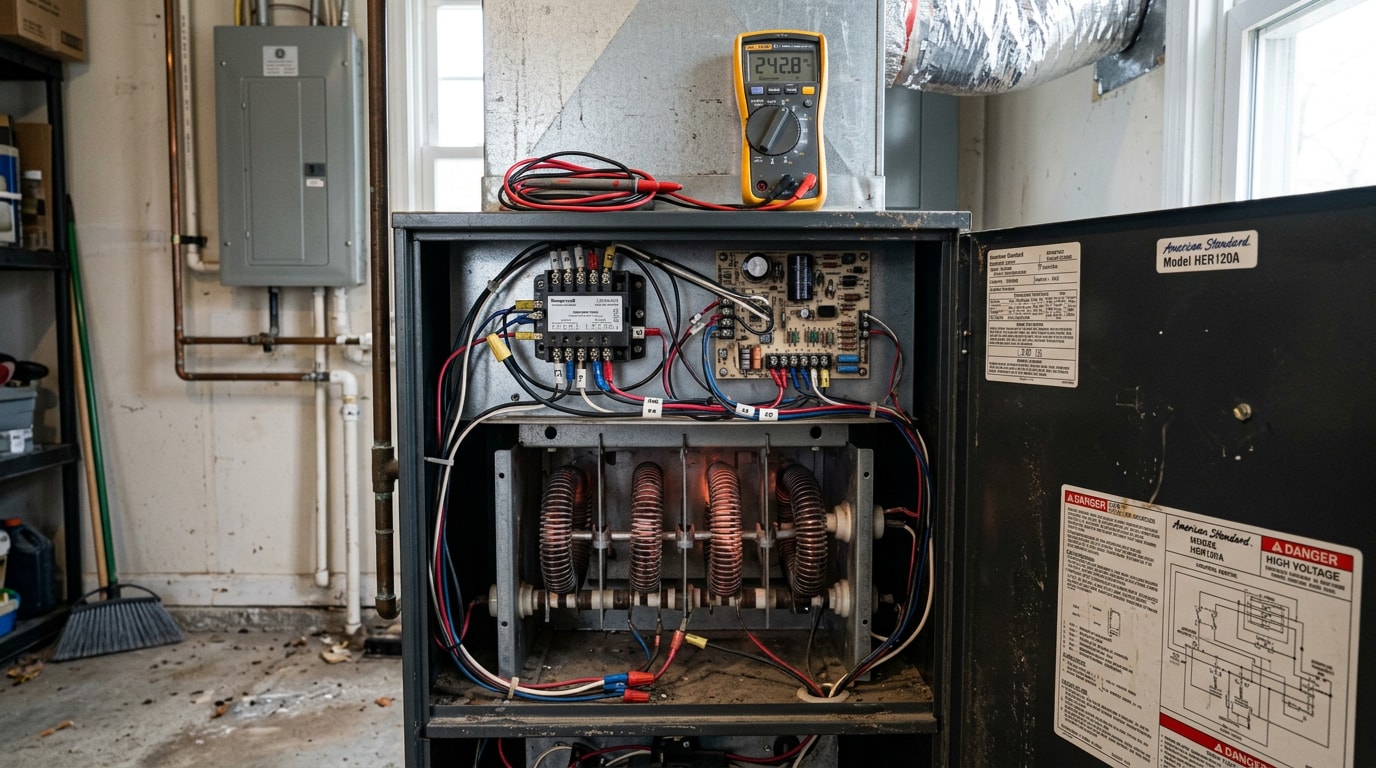
Electric furnaces bring heating elements online one stage at a time using a sequencer, which prevents all the elements from drawing full power at once and overloading the panel. If the sequencer stalls mid-cycle, the blower keeps running but one or more element stages never energize.
This is a common, often misunderstood cause of an electric furnace not blowing hot air, and confirming it requires a multimeter and training.
Burned-Out Heating Element
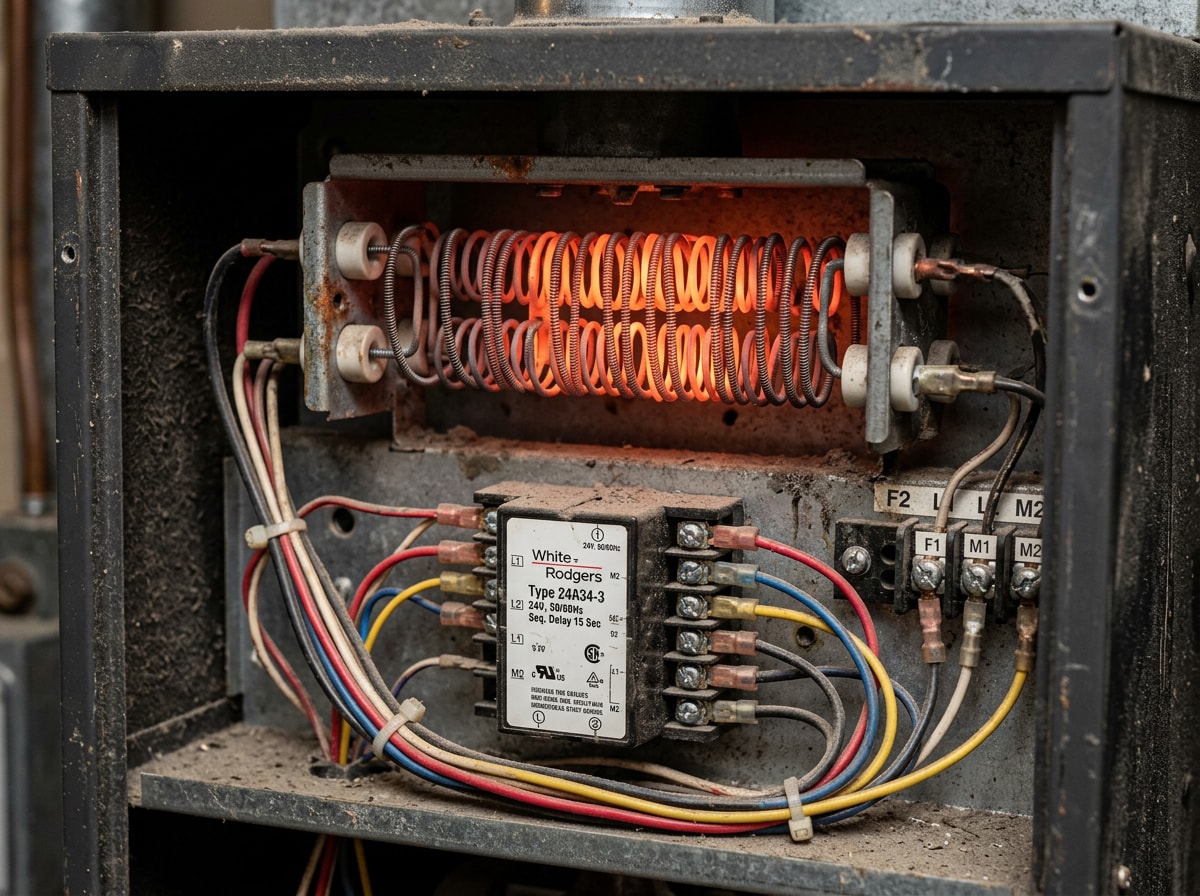
Most residential electric furnaces use two to five heating elements wired across separate stages, energizing one after another to ramp up heat gradually. A tripped high-limit switch or an open element changes that picture: air that never warms, air that's warm for thirty seconds then goes cold, or weak heat that never reaches full output.
That last scenario, partial heat, often means one element in a multi-stage bank has failed while the others still work. It's easy to mistake for "the furnace is just slow today."
Blower Motor or Capacitor Failure
A failing blower shows up differently than a heating element problem: little or no air movement from the vents at all, rather than air that's simply cool. A bad run capacitor is a frequent culprit, causing the motor to hum without spinning or to start and stall.
If airflow feels strong but cold, the blower is working and the problem is in the elements or sequencer. If airflow feels weak or absent, suspect the blower motor, capacitor, or the circuit feeding it.
Check Whether It's Actually a Heat Pump
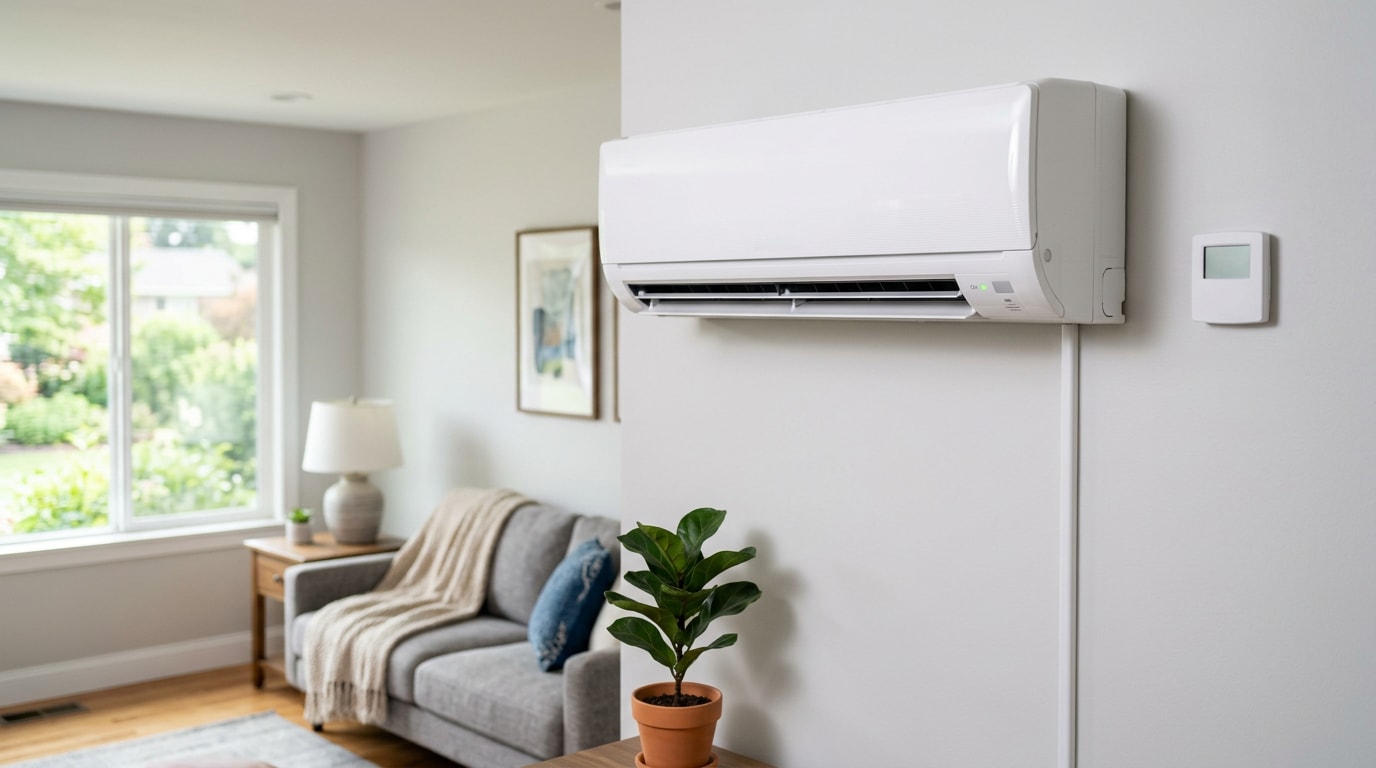
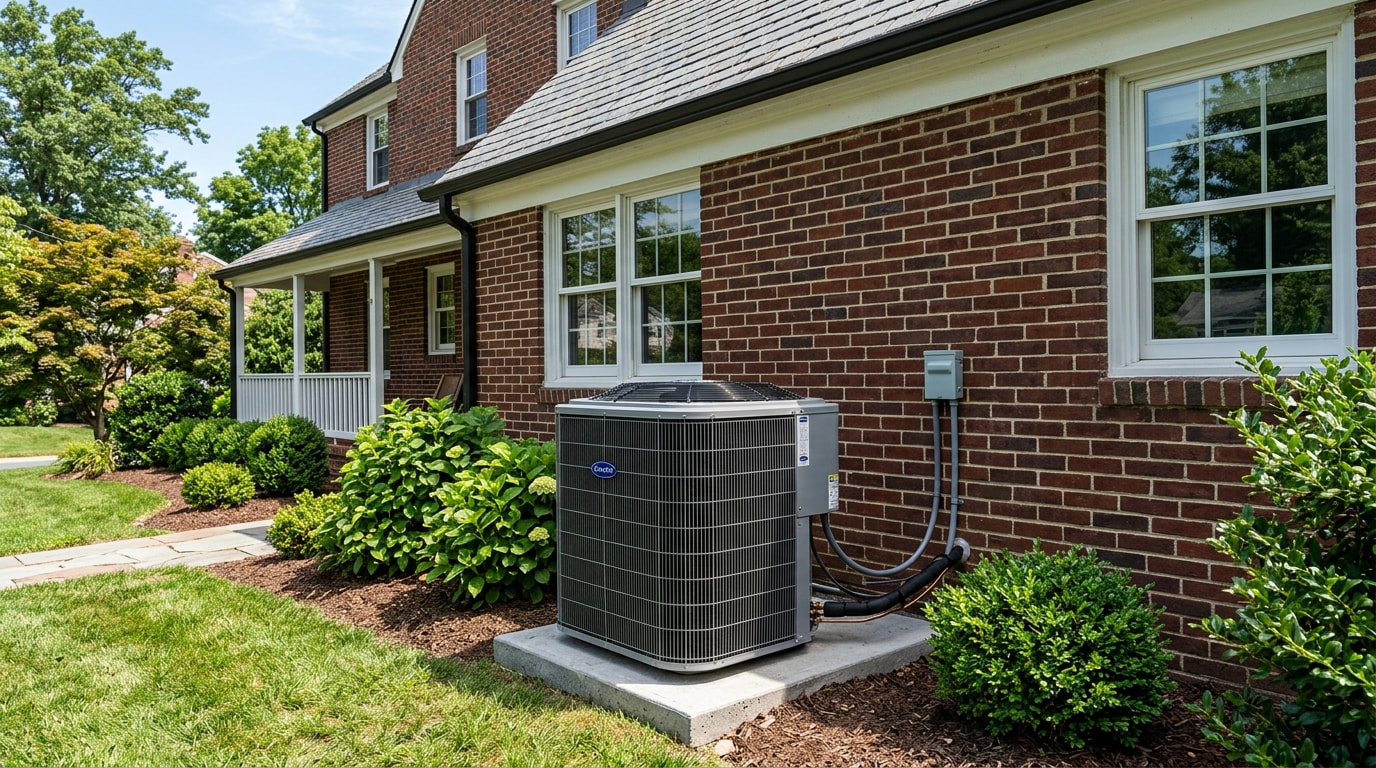
Many Timonium homes run a heat pump with electric resistance backup rather than a straight electric furnace, and the troubleshooting is different. An ENERGY STAR certified air-source heat pump provides highly efficient heating and cooling by extracting heat from outside into your home in winter and pulling heat out of your home in summer , so backup elements only kick in during extreme cold or when the heat pump can't keep up on its own.
If your thermostat has an "emergency heat" setting and the home still isn't warming, the problem may be with the outdoor heat pump unit rather than the backup elements. A heat pump repair visit can confirm which system is actually at fault.
Red Flags: Stop Troubleshooting and Call for Help
Electric furnaces don't carry a gas or carbon monoxide risk, but some symptoms still mean it's time to stop and call a professional:
- A burning smell, which can mean an overheating element or wiring insulation breaking down
- A breaker that trips the instant you reset it
- Buzzing or humming from the electrical panel
- Grinding noises from blower bearings
- Short cycling (turning on and off repeatedly within seconds)
Home heating equipment is a recognized fire risk; local fire departments responded to an estimated average of 44,210 home structure fires caused by heating equipment each year from 2016 to 2020 . If you see scorching, smell burning, or a breaker won't hold, cut power at the panel and schedule a furnace repair rather than resetting it again.
DIY Fix vs. Professional Repair: What It Actually Costs
Repair costs vary by part and local labor rates, so treat these as general ranges, not a quote.
| Fix | Typical Cost | Who Does It |
|---|---|---|
| Thermostat batteries | Under $10 | Homeowner |
| Filter replacement | $10–$30 | Homeowner |
| Breaker reset | $0 | Homeowner |
| Heating element replacement | Low hundreds of dollars per element | Licensed technician |
| Sequencer or control board | Similar to or higher than element cost | Licensed technician |
| Blower motor/capacitor | Moderate, varies by model | Licensed technician |
Skipping a proper diagnosis to save money up front can cost more long-term. Repeatedly resetting a tripping breaker risks damaging other components or creating a fire hazard, turning an affordable fix into a bigger repair. If a furnace is older and failing repeatedly, ask about HVAC equipment replacement costs before sinking more money into element-by-element repairs.
What a Professional Diagnosis Actually Covers
A thorough visit checks voltage at each heating element stage, amperage draw across the circuit, sequencer timing, blower performance, and duct static pressure, not just a single-point check at the thermostat. This is what catches intermittent or partial-heat problems that a quick glance misses. If a technician checks only one component and calls it done, ask what else was tested before you sign off on the repair.
Keep This From Happening Again
Annual service catches a weakening element or an out-of-time sequencer before it fails during a cold snap. It checks the same components most likely to cause a mid-winter breakdown: element resistance, amp draw, sequencer timing, and airflow.
A seasonal HVAC maintenance plan keeps this on a schedule without you having to remember to book it. For a deeper look at what a seasonal electric furnace check-up should include, see our electric furnace maintenance guide for Cockeysville, MD, which applies to Timonium systems as well.
Still Not Blowing Warm Air?
If you've worked through the checklist above and the air is still cool, the cause likely needs hands-on diagnosis, a failed element, a stuck sequencer, or a wiring issue that isn't safe to chase down yourself. That's a normal next step, not a sign you missed something obvious.
We handle electric furnace diagnostics across Timonium, MD and the surrounding area, and most no-heat calls get an element, sequencer, or blower diagnosis on the first visit. Get a free estimate or browse our full HVAC contractor services to see what's included. You can also learn more about our company on the homepage.
FAQ
Why is my furnace blowing cold air instead of hot?
Usually one of three things: the thermostat is set to "Fan" instead of "Heat," a dirty filter has tripped a safety limit switch, or a heating element has failed. A tripped breaker on one element bank can also cause partial, weak heat instead of a full shutdown.
How long should it take for an electric furnace blower to kick on?
Most electric furnaces start blowing air within 30 to 60 seconds of the thermostat calling for heat, as the sequencer brings stages online. A delay longer than a couple of minutes, or a blower that never starts, usually points to a sequencer or control board issue.
How do I reset my electric furnace at the breaker?
Locate the furnace's dedicated breaker (there may be more than one) at your home's electrical panel. Switch it fully off, wait about 30 seconds, then switch it back on. If it trips again immediately, stop resetting it and call a licensed technician.
What's the difference between auxiliary heat and emergency heat?
Auxiliary heat runs automatically alongside a heat pump when it needs extra help in cold weather. Emergency heat is a manual setting that runs only the electric backup elements because the heat pump itself has stopped working, and it costs more to run.
How much does it cost to fix an electric furnace that won't heat?
Simple fixes like a filter swap or breaker reset cost little to nothing. A professional repair for a heating element or sequencer commonly runs into the hundreds of dollars depending on parts and labor, so a technician's diagnosis is the only way to get an accurate number for your specific furnace.